
-
Content
Last Updated on August 4, 2023 by Labib Ahmad
Invoice vs receipt vs bill
Invoices and receipts are needed in all types of businesses, from brick and mortar businesses to e-Commerce businesses. If you're a business owner, you are probably looking for billing solutions or even invoicing software for your small business. But differentiating between an invoice and a receipt might leave you uncertain. And what about a bill? Is that something different? Don't worry! Read on to find out the purpose of each document type and which might suit your business the best.
What is a invoice?
An invoice is a document you provide to your customers when you want to collect payment for a product or service. Whenever your business offers goods or services that will be paid for on a specific date, you can send an invoice which details the business name, what's being sold, the total amount owed, and the due date of the payment.
Online Invoices are commonly used by business owners when there is a period between when the product or service is offered and when the payment is due.
Example invoice: If a customer is getting a new floor installed in their home, the sales invoice would include the cost of the services purchased, which includes the cost of the flooring, labour cost, and taxes. The invoice number and the date of the payment are also included. In this sales process, the customer might receive the invoice before the job begins, and you will request payment after the work is completed.
Small businesses can streamline their invoicing process and improve efficiency by using invoicing software specifically designed for their needs. Invoice software automates the process and aids you in creating your invoices and receipts together, tracks payments, and provides a centralized system for managing invoicing tasks, helping businesses stay organized and ensuring timely payment collection.

What is a receipt?
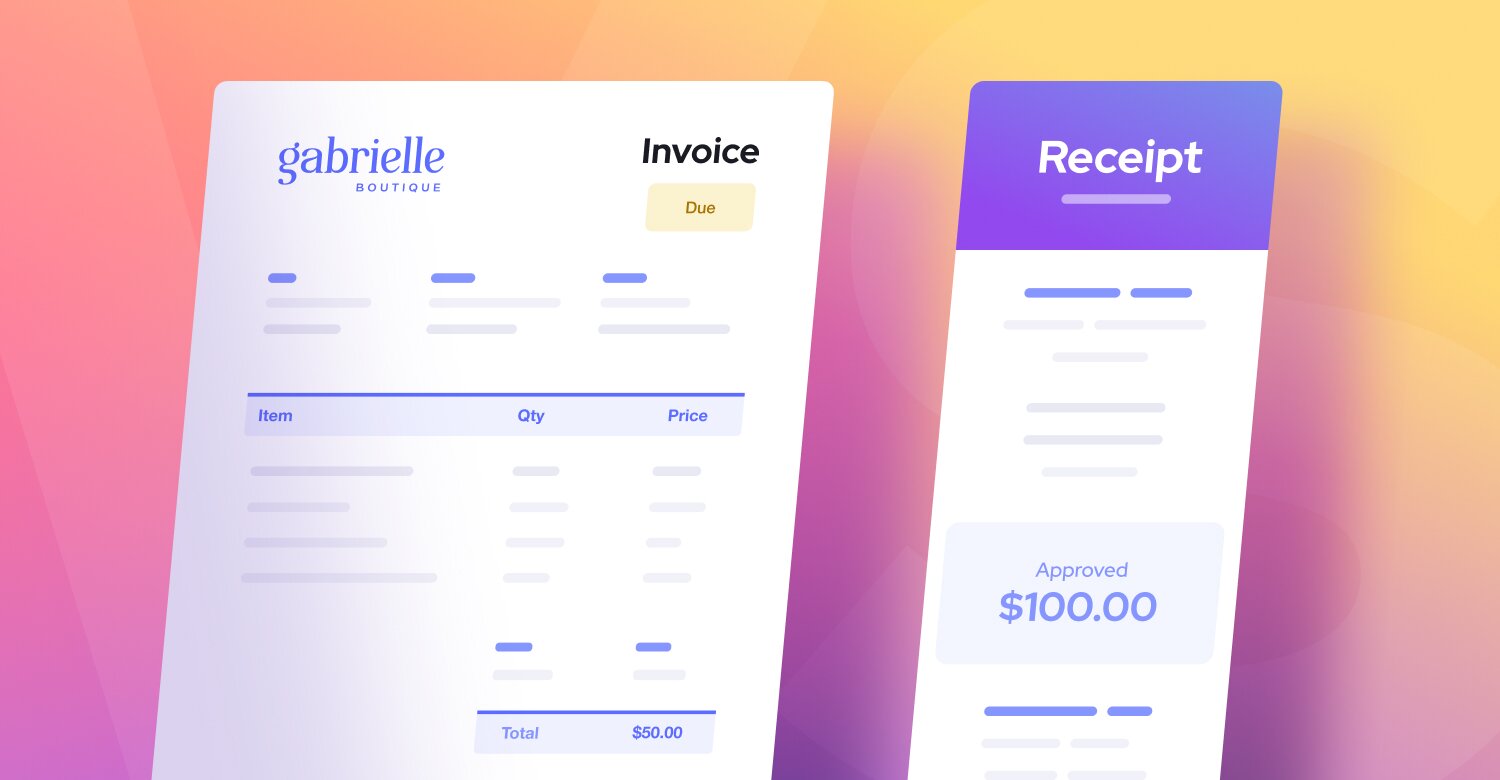
The main difference between an invoice and a receipt is when they are issued. Invoices are usually sent out before the customer pays for the service, while receipts are sent out after the customer pays.
Receipts serve as proof of purchase, proving that the customer has completed the payment and fully received the item or service. On the other hand, invoices play a distinct role as payment request documents, where the merchant provides a detailed breakdown of the services or items being offered, but the payment itself has not yet been processed.
What needs to be on an invoice?
Both an invoice and a receipt require different information. An invoice should include:
- Merchant's name
- Customer's name
- Date
- Unique invoice number
- Services rendered with price
- Payment due date
- Quantity of items/services sold
- Total amount due

What needs to be on a receipt?
A receipt should include:
- Merchant's name
- Date
- Services rendered with price
- Total amount paid, including taxes
What is a statement?
A statement is a summary provided to customers that details services provided or products purchased over a specified period of time (most often a month). Statements provide a detailed breakdown, line by line, of the different items a customer received during the statement period. A statement vs. an invoice: a statement will not include an amount due, whereas an invoice will list products/services and indicate how much payment is required.
Statements can be helpful for customers who have made multiple purchases or transactions between payment dates, so they can reconcile payment receipts with what they have purchased and review what they owe and why.
Example of a statement: If a customer completing a flooring project decides to do work on several different locations or rooms, then their statement is a useful reference for them to see what work was done for which areas and in what time frame.
What is a bill?
A bill is very similar to an invoice, and sometimes the two terms are used interchangeably. Like an invoice, a bill is a written summary of the amount of money owed for products or services prepared by the business providing those products or services. Customers might refer to an invoice they received from a business as a bill.
Generally, the difference between an invoice and a bill depends on who is talking about it. Also, depending on the context, an invoice may be sent before or after a job is done with a future due date, while a bill (like in the case of a restaurant bill) is usually delivered and due immediately.
Example of a bill: When a flooring project is complete, the business that did the work will send the customer an invoice that details what work was done and the total cost for the project, but the customer would receive it and refer to it as a bill. Upon receiving the bill, the customer will make the payment to the business owner.
An example of when a business may refer to an invoice as a bill would be an architecture or design firm "billing" a client for their employees' time spent on a project.
Is there a difference between an estimate and a quote?
What is an estimate?
If you're doing work or providing a service where you do not have all the details for the job, you might provide your customers with an estimate. Estimates are great for customers who want to see what the price of a job might be before it's completed so they can get an idea of the approximate cost and either plan for the payment or compare it to another estimate.
Because estimates are informal documents outlining your best estimation of the price, once the work is complete, you can adjust the final cost on the customer's bill. The final cost may be higher or lower than the estimate you originally provided.
Example of an estimate: If a customer is wanting to complete a flooring project for their home, they might call you for an estimate. Because you haven't seen the room for the project, your estimate would be based on the size of the room the customer tells you and your estimated labour costs for removing the current flooring and installing new flooring.
What is a quote?
If a customer asks for a quote on a service or for an item, you can provide them with a written document referencing what the cost of the work will be. Quotes should involve the specifics of the purchase the customer might make, and you should collect the exact requirements for the job by completing an on-site visit prior to providing a quote.
Customers who are completing projects that have significant expenses associated with them may get a quote before agreeing to the work, so they know ahead of time what the job is going to cost them. Quotes are binding documents, and you cannot change the price once the customer has agreed to it, so it is very important to ensure they are accurate.
Example of a quote: If a customer wants to know how much a flooring project will cost them, you would send an employee out to measure the area of the project and determine how long it will take to remove the existing flooring and reinstall new materials. Once these factors have been determined, you would issue a quote to the customer with the cost for the project.
What is an order?
If a customer makes a request for a product either verbally or through a written form, then they are submitting an order. When a customer submits an order, they express their intention to make a purchase.
What is a purchase order?
A purchase order, or "PO," is a formal written document that details a transaction between a customer and your business for the items or services that they are buying.
The purchase order is a commercial document and is used to clearly communicate the details of an order to a company. This streamlines the ordering process for that business and helps them track which orders are coming in to help manage inventory.
Finally, purchase orders are considered legally binding once they are accepted by the business providing the products or services.
Example of a purchase order: Before a customer starts work on their flooring project, the company doing the work might submit a purchase order to a supplier, so they can bring in the materials needed for the floors. Because payment terms on a purchase order are legally binding, if a customer decides not to go forward with the work, they can be held responsible for paying for the materials they requested.
Final thoughts
Making yourself familiar with some of the key differences in the types of documentation used for purchases can help you sort through the "paper trail" that comes with making and accepting payments. Usually, the differences are fairly minuscule, but they can be important to mark so that you and your customer are both aware of how their purchases are being accounted for.
Related Articles
-

6 tips to collect outstanding invoices faster
Ryleigh Stangness | February 3, 2023
-
Progress Billing for Your Business: A Guide
Ryleigh Stangness | January 16, 2023
-
What Is An Invoice? The Basics of Invoicing
Ryleigh Stangness | December 2, 2022
-

Digital Receipts Are the Future: Should Merchants Go Paperless?
Danny Randell | September 2, 2021
-
The Best Invoice Software: Top 5 Options for SMEs
Danny Randell | August 24, 2021
-
Online Invoice Payments: An Easy Way to Increase Cash Flow
Nic Beique | September 6, 2020