
-
Content
You've had that brilliant business idea rattling around in your head. Maybe you've even been losing sleep over it, excitedly planning your logo or sketching out your first product. But then reality hits: the paperwork. The forms. The question of how to actually make your idea official.
This guide is designed to cut through that noise. We'll walk you through the essential steps to register your business in the U.S., from choosing the right structure to getting your tax ID. It's a critical step that many new entrepreneurs find overwhelming, but it doesn't have to be.
Just a heads-up: while this article is a great starting point, think of it as your first step, not the only one. This guide is for informational purposes only, so be sure to consult with a qualified legal professional to get advice tailored to your specific business and situation if that feels needed.
What are the different types of business ownership?
Choosing a business structure is one of the biggest decisions you'll make as an entrepreneur. It's not just a box you check on a form; this choice affects how you pay taxes, your personal liability for business debts, and even how you manage your day-to-day operations. Before you can even begin the registration process, you need to understand which type of business ownership is the right fit for your unique goals.
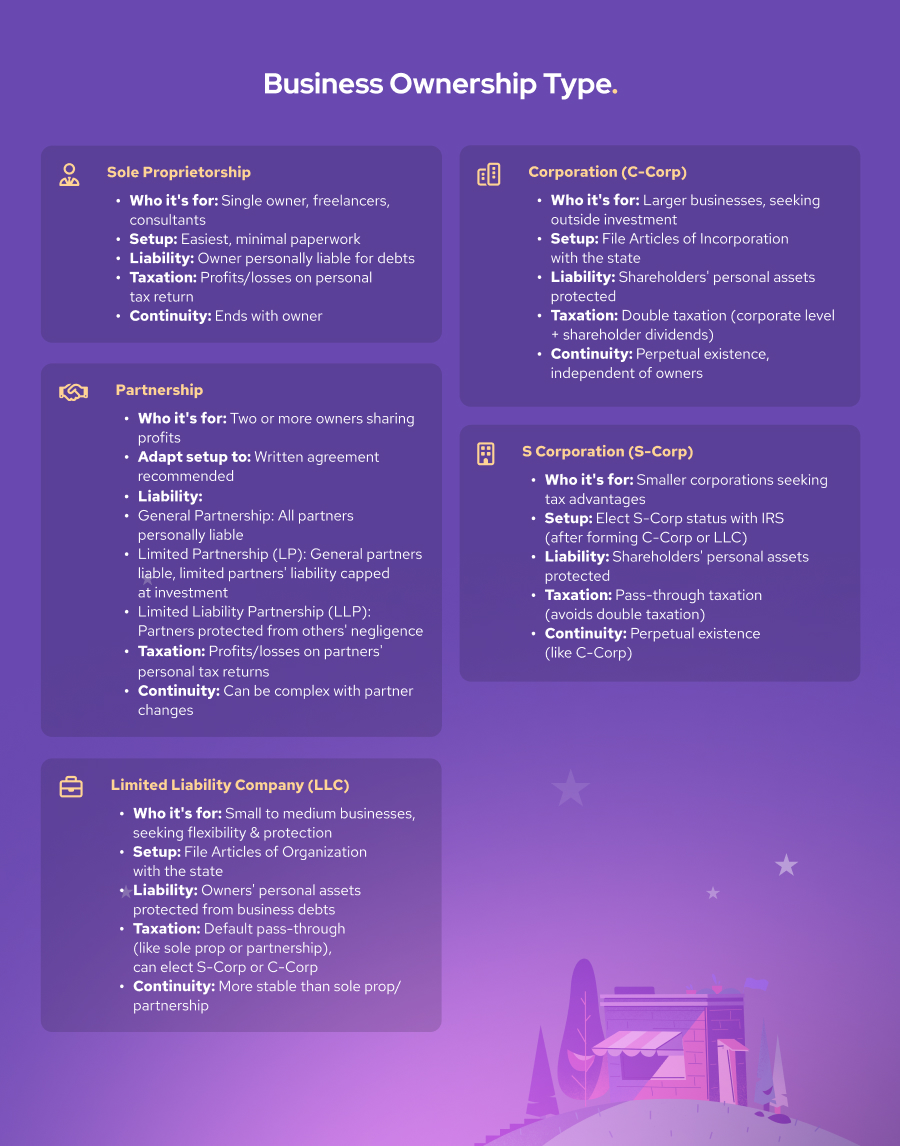
There are five types of business ownership that can be considered when registering your business.
- Sole proprietorship
- Partnership
- Corporation
- S corporation
- Limited liability company (LLC)
1. Sole proprietorship
A sole proprietorship is the simplest business structure to set up. Think of it this way: you and your business are one and the same. There’s no legal separation, which means all business income and expenses are reported on your personal tax return. This is great for simplicity, but it also means you are personally responsible for all business debts and liabilities. If someone sues your business, they are essentially suing you. Many freelancers, consultants, and small shop owners choose this path because it’s easy to get started with very little paperwork.
2. Partnership
A partnership is a business structure for two or more people who agree to share in the profits or losses of a business. The most common type is a general partnership, where all partners share equal responsibility for managing the business and are personally liable for its debts. Just like with a sole proprietorship, there’s no legal separation between the owners and the business. This means each partner is personally liable for the full extent of the business's debts, not just their share. While you can create a partnership with a simple verbal agreement, it's highly recommended to have a written partnership agreement that clearly outlines each partner’s responsibilities, contributions, and share of the profits.
Beyond the general partnership, there are also specialized types, like the Limited Partnership (LP) and the Limited Liability Partnership (LLP). An LP includes at least one general partner who has full control and personal liability, and at least one limited partner who only contributes capital and has no say in management. The limited partner’s liability is capped at the amount they invested in the business, protecting their personal assets. An LLP is designed for professionals (like lawyers or accountants) and gives all partners a certain level of personal liability protection. In an LLP, a partner is not personally liable for the business's debts or for the negligence of another partner.
3. Corporation
A corporation is a separate legal entity from its owners. This is a more complex structure, but it offers the most protection. Because the business is its own legal "person," it can be taxed, sued, and enter into contracts independently of its owners. The owners are called shareholders, and their personal liability is limited to their investment in the company. If the corporation goes into debt or is sued, the shareholders’ personal assets—like their homes or savings—are generally protected. Corporations are often the choice for larger companies or businesses that plan to raise money from investors.
4. S corporation
An S corporation is not a business structure in itself, but rather a special tax status you can elect for a corporation or, in some cases, an LLC. The "S" stands for small business corporation. This election allows the business to avoid double taxation—where the company’s profits are taxed once at the corporate level and again when they are distributed to shareholders as dividends. Instead, the profits and losses are "passed through" to the owners' personal income tax returns, similar to a partnership. This can lead to significant tax savings, but it comes with strict requirements, such as a limit on the number of shareholders.
5. Limited liability company (LLC)
A limited liability company (LLC) is a hybrid business structure that combines the limited liability protection of a corporation with the simplicity and tax benefits of a sole proprietorship or partnership. It's often considered the best of both worlds for small business owners. Like a corporation, an LLC protects your personal assets from business debts and liabilities. But like a sole proprietorship or partnership, its profits and losses can pass through to the owners' personal tax returns, avoiding double taxation. Because of its flexibility and liability protection, the LLC has become one of the most popular structures for small to medium-sized businesses.
Can a non-U.S. citizen start a business in the United States?
Yes, a non-U.S. citizen can start a business in the United States. In fact, you don't even have to live in the country to form and own a U.S. company. The U.S. legal system allows foreign nationals to create legal business entities like an LLC or a C-Corporation with the same rights as a U.S. citizen.
However, it's very important to understand the key difference between owning a business and working in it. You can own a U.S. business from anywhere in the world, but if you want to be physically present in the U.S. to operate or manage the company, you will likely need a visa that permits that activity. There are several visa options for entrepreneurs and investors, like the E-2 investor visa or the L-1 visa for transferring to a U.S. branch of an existing company. This is a critical distinction that often trips up new business owners, so it's a good idea to consult an immigration lawyer who can guide you through the process if you plan to work for your U.S. business.
What licenses and permits are needed to start a business?
Unlike business registration, which often happens at the state level, licenses and permits can be required at multiple levels of government—federal, state, county, and city. This means there is no single master list of what you need. The permits required for your business will depend entirely on your industry, your business activities, and your physical location.
To give you an idea of what to expect, here's a quick breakdown of the different levels and the types of licenses they might require:
- Federal licenses: Most businesses don't need a federal license. However, if you are involved in certain highly regulated activities, you will need to get a license from a federal agency. For example, if you sell alcohol, tobacco, or firearms, you’ll need a license from the Alcohol and Tobacco Tax and Trade Bureau (TTB) or the Bureau of Alcohol, Tobacco, Firearms, and Explosives (ATF). Other regulated industries include transportation, fishing, or nuclear energy.
- State licenses: Every state has its own set of license requirements. This is where you might get a general business license for your company. Many states also require professional licenses for certain occupations, such as for doctors, lawyers, accountants, or barbers. If you plan to sell physical goods, you'll also likely need a sales tax permit from your state's tax department.
- Local licenses and permits: This is where things get the most specific. Your city or county may require a general business license to operate within its limits. You might also need a permit for things like signage, building renovations, or even a home occupation permit if you're running the business from your house. Businesses that serve food will need to get a health department permit and pass regular inspections.
The best way to figure out what you need is to research the specific requirements for your industry and location. Many states and cities have online tools to help you find a list of necessary permits. Another great resource when registering your business is your city or state Chamber of Commerce. Example: Palm Springs Chambers of Commerce.
How to register your business
Now that you've got your business idea and have decided on a business structure, it's time to make it official. Registering your business doesn't have to be a complicated process, but it does require careful attention to detail.
Here's a step-by-step guide to help you get it done right:
- Choose your business structure
- Pick a business name
- Register your business
- Get an Employer Identification Number (EIN)
1. Choose your business structure
This is the most important first step, and luckily, you've already done the groundwork! We've already covered the different types of business ownership, from sole proprietorship to LLCs. The structure you choose will dictate what paperwork you need to file and where you need to file it. For instance, if you're a single-owner business just getting started, a sole proprietorship is a simple option that doesn't require state registration. But if you want liability protection or plan to raise money from investors, you'll need to form a more formal entity like an LLC or a corporation.
2. Pick a business name
The legal name of your business is more than just a brand—it's how the government identifies your company. Your chosen name must be unique and available. Before you get your heart set on a name, you need to do a few things:
- Check for state availability. The best way to figure out what you need is to research the specific requirements for your industry and location. Many states and cities have online tools to help you find a list of necessary permits. You can also do a free business name search on your Secretary of State's website to make sure the name you want isn't already taken by another registered entity in that state. For example, the Wyoming Secretary of State has a straightforward Business Entity Search tool that is easy to use.
- Check for trademarks. "It's also a good idea to search the U.S. Patent and Trademark Office (USPTO) database to see if your name has been trademarked. A simple check now can help you avoid legal headaches down the road. You can use the Trademark Electronic Search System (TESS) for a free search.
- Check domain names and social media handles. This isn't a legal requirement, but it’s crucial for building your brand. Make sure you can get a matching domain name and social media handles before you commit to a name.
Some business types have specific naming rules. For example, if you're forming an LLC, your name must include "Limited Liability Company" or "LLC."
3. Register your business
This is the main event. For sole proprietorships and general partnerships, this step may be as simple as getting a local business license or filing a "Doing Business As" (DBA) name if your business operates under a name different from your own.
For LLCs and corporations, you'll need to officially register your business with the state government. This is usually done by filing a document with the Secretary of State's office.
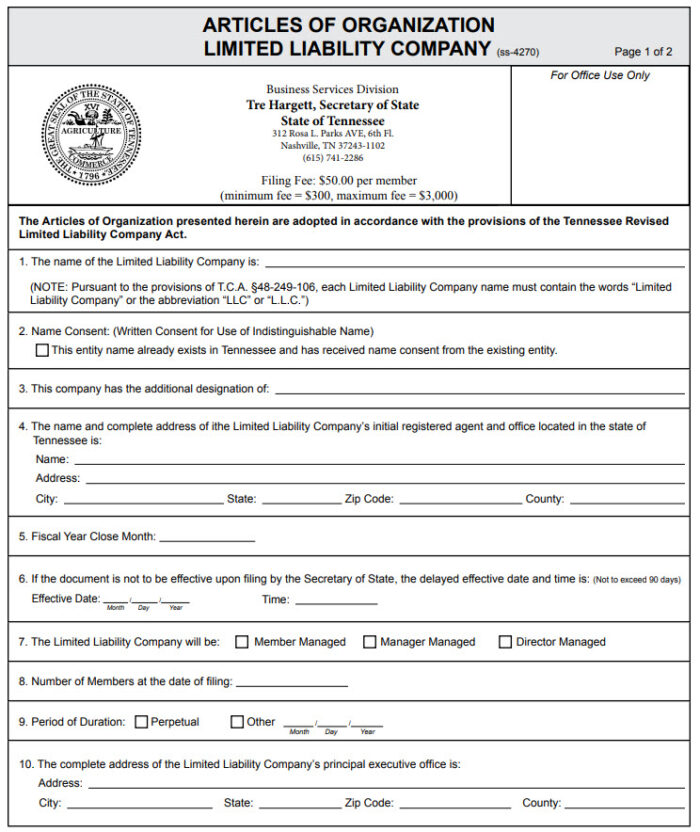
- For an LLC, you'll file a document called the Articles of Organization. This document lists basic information about your company, such as its name, address, and the name of a registered agent. A registered agent is a person or service authorized to accept legal documents on your company’s behalf. Every U.S. business is required to have one.
- For a corporation, you'll file Articles of Incorporation. This document is similar to the Articles of Organization but may also include details about the company's stock structure.
You can often complete these filings online, which is the fastest and most popular method.
4. Get an Employer Identification Number (EIN)
Think of your EIN as your business's Social Security Number. This unique nine-digit number is issued by the IRS and is required for most businesses, especially if you plan to hire employees, open a business bank account, or file business taxes.
You can get an EIN for free by applying directly with the IRS. For U.S. citizens, the process is simple and can be completed online using the IRS's online EIN application.
For non-U.S. citizens, the process is slightly different. You will need to fill out IRS Form SS-4. If you don't have a Social Security Number or a U.S. address, you cannot use the online application. Instead, you'll have to submit the form by fax or mail. You can also get help from a third-party service or a lawyer to make sure the process goes smoothly.
How long does it take to register a business?
The simple answer is: the time it takes to register a business varies. It can take as little as a single day or as long as several weeks, depending on a few key factors. The two biggest factors that influence your timeline to register are your business type and the state where you're registering.
- Business Type: A sole proprietorship is the fastest to set up because it often doesn't require any state-level registration. On the other hand, forming an LLC or a corporation involves submitting documents to the state, which takes longer.
- State of Registration: Each state has its own processing times. Some states, like Colorado and Wyoming, offer immediate online filing, which means you can get your business registered in a day. Other states, like New York or California, can have processing times of a few weeks or more due to a higher volume of applications.
- Filing Method: Online filing is almost always the fastest option, with many states offering instant or next-day processing. Filing by mail can add several weeks to the process.
- EIN for Non-U.S. Citizens: If you're a non-U.S. citizen without a Social Security Number, the process of getting an EIN can take longer. While U.S. residents can get an EIN instantly online, non-residents must file a paper or fax form. This typically takes anywhere from four business days (by fax) to four weeks (by mail).
Many states offer expedited services for an extra fee. If you're in a hurry, paying for a rush filing can cut down the wait time from weeks to just a few days.
What are the costs associated with business registration?
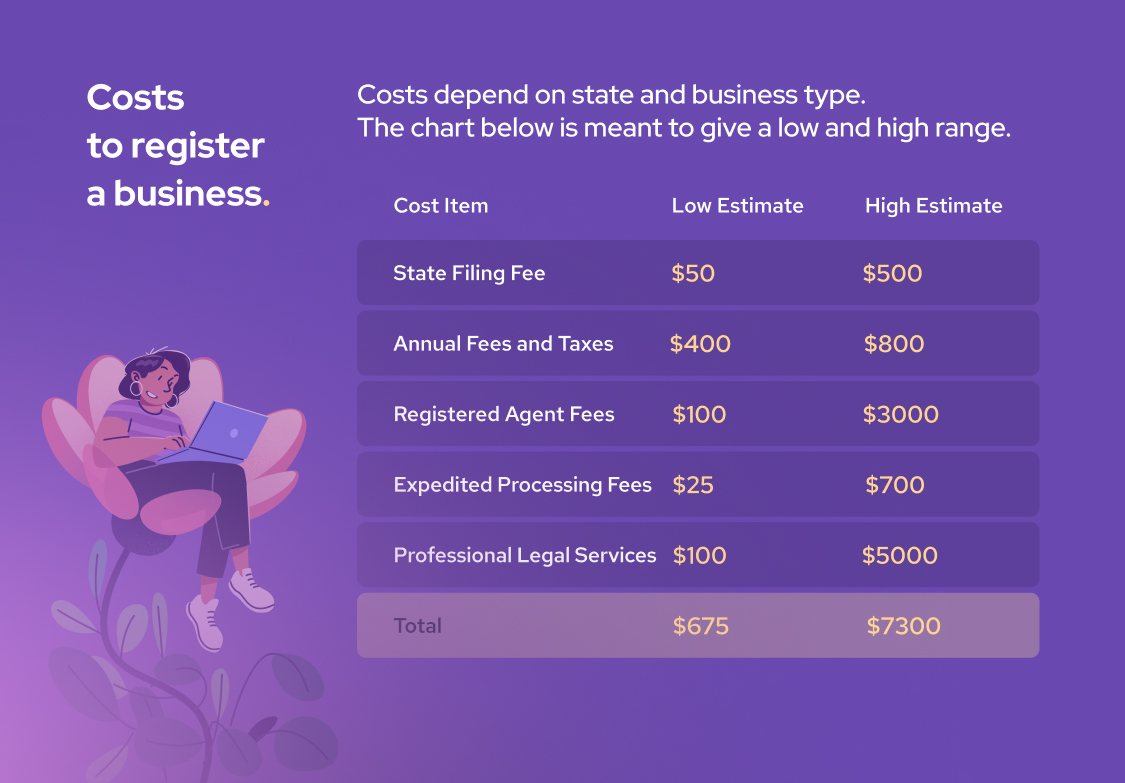
The costs associated with business registration can vary dramatically. There's no single price tag because the total cost depends on your business structure, the state you choose to register in, and any professional services you decide to use.
Here's a breakdown of the common costs you can expect to pay:
- State Filing Fees: This is your primary cost. It's the fee you pay directly to the state to file your formation documents (like Articles of Organization for an LLC or Articles of Incorporation for a corporation). These fees can range from as low as $50 in states like Colorado and Arizona to as high as $500 in Massachusetts.
- Annual Fees and Taxes: Many states require businesses to pay an annual fee to stay in good standing. This might be called an annual report fee, a franchise tax, or a license renewal. These costs also vary widely. For example, Delaware has a $300 annual franchise tax, while other states have no annual fee at all. California has a minimum annual franchise tax of $800, which is one of the highest in the country.
- Registered Agent Fees: Most states require all LLCs and corporations to have a registered agent. This person or service must have a physical address in the state to receive legal and government documents on your company's behalf. If you're a non-U.S. resident or don't have a physical office in the state of formation, you’ll need to hire a registered agent service, which typically costs between $100 and $300 per year.
- Expedited Processing Fees: If you're in a hurry to get your business registered, most states offer expedited processing for an additional fee. This can range from an extra $25 to several hundred dollars, depending on how quickly you need the documents processed.
- Professional Services: Many entrepreneurs, especially those new to the process or non-U.S. residents, choose to use an online legal service or a lawyer to help with the filing. While these services can add a few hundred to a thousand dollars to your total cost, they ensure the paperwork is filed correctly and can save you from costly mistakes down the road.
What are the tax implications of registering a business?
How your business is taxed is the single most important implication of registering your business. Your chosen business structure determines whether your company is taxed as a separate entity or whether its profits and losses "pass through" directly to your personal tax return.
When Taxation is Pass-through
Most small businesses operate under what's called pass-through taxation. This means the business itself does not pay federal income tax. Instead, the profits and losses are passed through to the owners, who then report them on their personal income tax returns. This avoids the business being taxed twice.
Sole Proprietorship & General Partnership: The business's income and expenses are simply reported on the owner's personal tax return. For a sole proprietorship, this is done on a Schedule C of Form 1040. The owner is responsible for paying both income tax and self-employment taxes (Social Security and Medicare). In a partnership, each partner receives a Schedule K-1 that shows their share of the profits and losses, which they then report on their personal return.
LLC: A Limited Liability Company offers tax flexibility. By default, a single-member LLC is taxed as a sole proprietorship, and a multi-member LLC is taxed as a partnership. This means its profits and losses also pass through to the owners' personal tax returns. However, an LLC has the option to elect to be taxed as a corporation (either a C-Corp or S-Corp), which can be beneficial in certain situations.
When Tax is Corporate Taxation
C Corporation: A C Corporation is a separate legal and tax-paying entity from its owners. This means it is subject to double taxation. First, the corporation pays income tax on its profits at the corporate tax rate. Then, when a portion of the after-tax profits are distributed to the shareholders as dividends, those shareholders are taxed again on their personal returns.
S Corporation: An S corporation is not a business structure, but a tax status you can elect for an LLC or corporation. The "S" stands for small business. This election allows the business to avoid double taxation. It operates as a pass-through entity, where the company's profits and losses pass directly to the owners' personal tax returns, similar to a partnership. This can offer significant tax savings for the owner.
What to do after registering your business?
Now that the legal paperwork is complete and you’ve registered your business, it's time to get down to “real” business. Registering is just the first step; there are a number of crucial follow-up tasks to ensure your company is set up for success and stays in good standing.
Here’s your checklist of what to do after registering your business:
- Open a business bank account
- Set up a bookkeeping and accounting system
- Obtain necessary licenses and permits
- Find a payment processor
- Get business insurance
1. Open a business bank account
Separating your personal and business finances is non-negotiable. Using a separate bank account for your business makes it far easier to track income and expenses, file your taxes, and protect your personal assets from business liabilities. To open an account, you'll need to bring your business formation documents (like your Articles of Organization or Incorporation) and your EIN. It's a key step in creating the financial identity of your new company.
2. Set up a bookkeeping and accounting system
Keeping a close eye on your finances from day one is essential for understanding your business’s health. You don't need to be an accountant to get started. Many new business owners use simple spreadsheets, while others opt for user-friendly software like QuickBooks or Xero. The goal is to track all your revenue and expenses accurately so you can easily analyze your performance and have all the necessary information ready for tax season.
3. Obtain necessary licenses and permits
Remember that business registration is just one part of the legal process. Depending on your industry and location, you may still need to acquire additional licenses and permits. This could include a local business license from your city or a sales tax permit from your state if you sell physical goods. The easiest way to figure out what you need is to contact your city and county clerk's office, as requirements can vary significantly.
4. Find a payment processor
As a business owner, you need a way to get paid. This is where a payment processor comes in. A payment processor is the company that handles credit card transactions for your business, allowing you to accept payments from customers in person, online, or over the phone. Choosing the right processor is an important decision. You'll want to find a partner that offers transparent pricing, excellent customer support, and the tools you need to grow. Helcim, for example, is a great option for businesses that need to accept payments with clear, interachange-plus pricing.
5. Get business insurance
Business insurance is often an overlooked, but critical, step. The right insurance can protect your company from financial ruin due to unexpected events. While the specific types of insurance you need will vary, most businesses should consider General Liability Insurance, which protects against claims of bodily injury or property damage. Other common types include Professional Liability (for service-based businesses) and Commercial Property Insurance (if you have a physical location or equipment). Working with an insurance broker can help you find the right coverage for your specific needs.
FAQs
Can a Canadian register a business in the U.S.?
Yes, absolutely. A Canadian can register a business in the U.S. without being a U.S. citizen or a permanent resident. The U.S. legal system allows non-residents to form and own a U.S. business entity, such as a C-Corporation or an LLC. However, while you can own the company, you cannot legally work for it on U.S. soil without the proper work visa, which is a separate and distinct process. Many entrepreneurs choose to own a U.S. company for tax benefits or to gain access to the large U.S. market, even if they never step foot in the country.
How to move a Canadian business to the U.S.?
There is no formal process for "moving" or transferring a Canadian business registration directly to the U.S. Instead, you create a new U.S. legal entity that is owned by your Canadian company. This is a common strategy for international expansion. For example, your Canadian company could form a U.S. subsidiary, which would be a separate legal entity registered in a U.S. state. This allows you to have a physical and legal presence in the U.S. for marketing, sales, and logistics purposes while maintaining your original company in Canada.
Can you run a U.S. registered business from another country?
Yes, you can run a U.S.-registered business from another country, but you'll need to set up the right systems. A key step is appointing a registered agent in the U.S. who has a physical address in the state where your business is registered. This agent is legally responsible for accepting official government and legal mail on your behalf. Additionally, you will need a U.S. business address to obtain an Employer Identification Number (EIN) and to open a U.S. business bank account, which is a key part of operating your business across borders.
Do you need a U.S. address to register a business in the U.S.?
Yes, you do. All states require that a business have a physical U.S. address for a registered agent, which is the person or entity responsible for accepting legal and official documents for your company. This address is a public record. Since many non-residents don't have a U.S. address, they use a professional registered agent service, which provides an address for this purpose. This is a simple and common solution that allows you to meet the legal requirements without needing to be physically present.
Do I need a lawyer to register a business in the U.S.?
No, you are not required to hire a lawyer to register a business in the U.S. Many entrepreneurs successfully handle the process themselves or use an online filing service. The required paperwork is often straightforward, and many states allow for online submissions. However, a lawyer can provide invaluable advice on a number of key issues, such as choosing the right business structure for your specific situation, navigating complex tax implications, or setting up a partnership agreement. While not a requirement, getting professional advice can save you from costly mistakes in the long run.
Related Articles
-

How to accept credit cards online - A small business guide
Robert Luong | December 11, 2024
-

How to accept in-person payments: A guide for small business owners
Feyi Oladipo | September 13, 2024
-

Setting up ACH payments for your small business
May Montenegro | August 19, 2024
-

8 ECommerce Business Expenses To Expect and Manage
Erika Rykun | January 6, 2023