
























Yes, healthcare clinics can store patients’ credit cards on file, but only when they do it the right way. The safer approach is to use a PCI-compliant payment provider. In this article, we’ll walk through when card-on-file payments make sense, when they do not, what policies clinics should have in place, and how to keep the process secure and transparent for patients.
Why do healthcare clinics store patients’ credit cards on file?
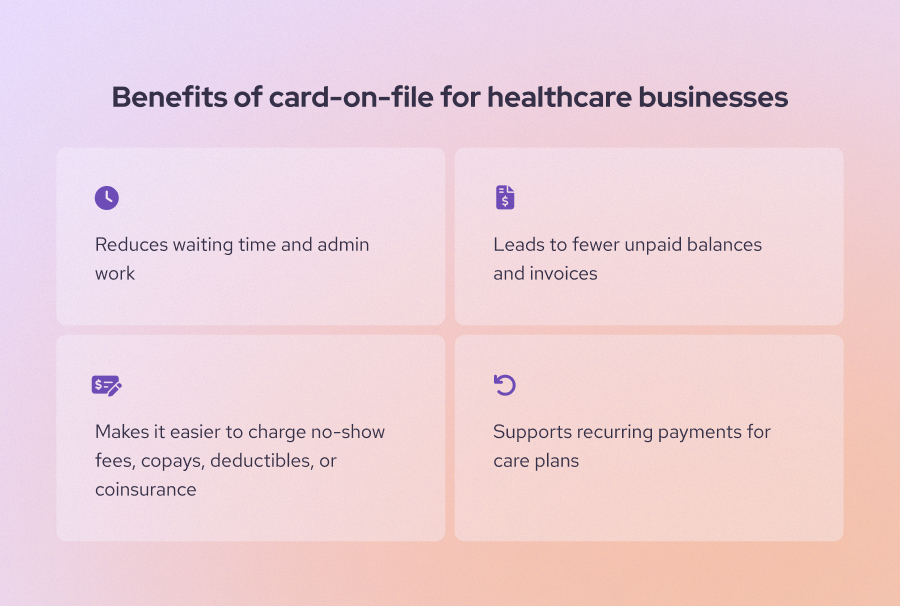
Healthcare clinics store patients’ credit cards on file to have a more reliable way to collect copays, deductibles, and coinsurance. Instead of waiting for patients to make payments themselves, clinics can process payments on their behalf, which saves time for both the clinic and the patient. It makes billing less messy: fewer statements, fewer calls, and fewer unpaid balances.
Charging cards on file is much faster than the old billing routine of sending a statement and waiting for payment. The old routine creates delays, extra administrative work, and a lot of small balances that are surprisingly hard to collect.
Most consumers are already used to saving payment methods for recurring bills and online purchases, such as on Amazon and subscription services. In fact, according to Mastercard The future of bill Payment research, 78% of consumers preferred using the same payment method for recurring bills as for other online payments.
Because of that, card-on-file payments can feel familiar and convenient for patients. Still, clinics can only use card-on-file payments in a compliant and legal way when they follow the proper consent, privacy, and payment security requirements.
What are the risks of keeping patients’ credit cards on file?
Keeping patients’ credit cards on file can make billing easier, but it also creates real risks that clinics need to manage carefully. At a high level, the main risks are:
- Data breach risk: card details can be exposed if they are stored insecurely.
- PCI and HIPAA risk: clinics must follow payment security rules and protect patient-related information properly.
- Trust risk: patients may lose trust if charges are unclear or unexpected.
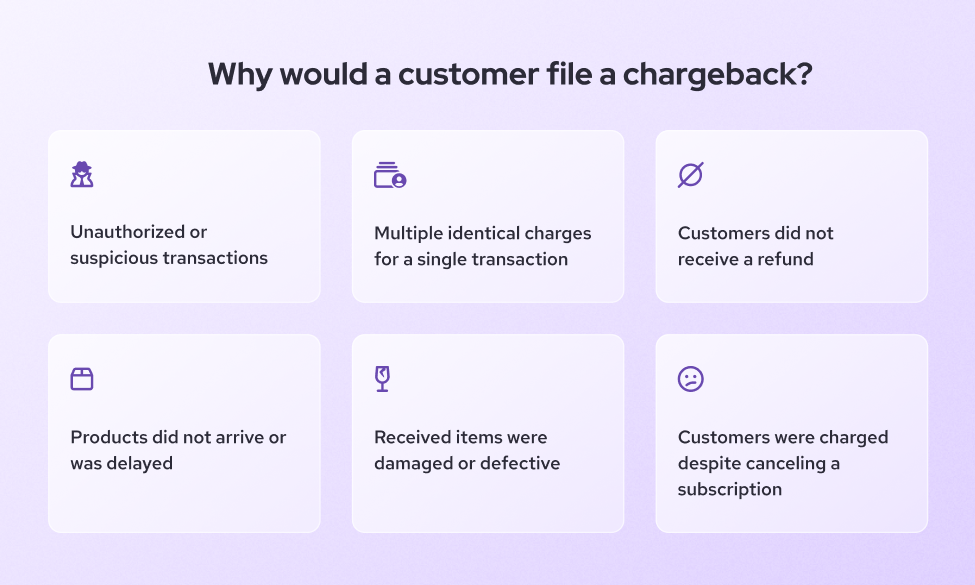
- Payment dispute risk: patients may file credit card chargebacks or ACH/EFT disputes if they do not recognize or agree with a charge.
Risk 1: Data breach risk
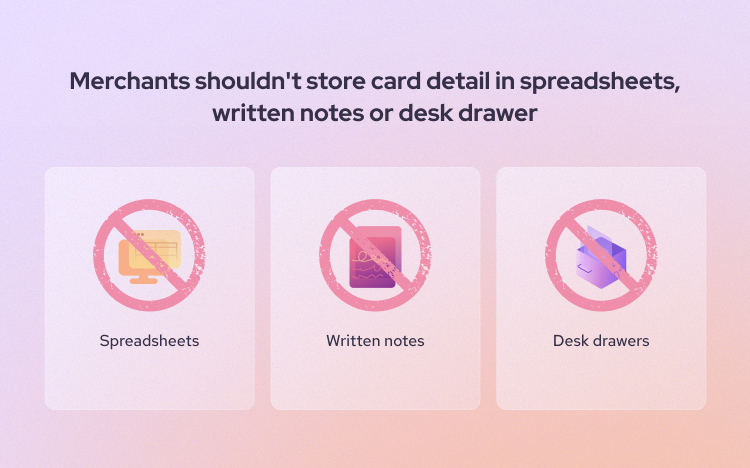
Healthcare clinics should use a secure payment vault, such as Helcim Card Vault, with tokenization to store patients’ credit cards on file. Clinics should not store patients’ card details in spreadsheets, written notes, desk drawers, or their own internal systems, because doing so increases the risk of hacking, theft, and unauthorized access.
Risk 2: PCI and HIPAA compliance risks
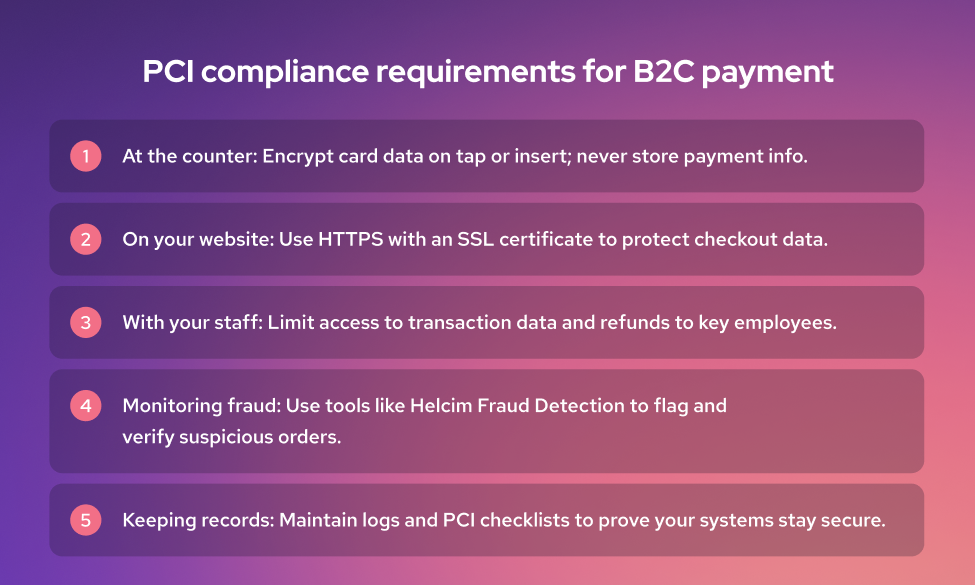
Once a clinic stores card data, it falls under PCI DSS compliance rules. Most secure payment vaults, such as Helcim Card Vault, are built to support PCI and HIPAA compliance and do not store CVV or CVC codes. Using a secure vault instead of storing card details yourself can reduce compliance risk, but the clinic still needs proper policies and staff processes in place.
Payment information in a clinic can also be tied to patient identity, billing records, and clinical context. Because of that, clinics also need to make sure their operations and payment workflows meet HIPAA requirements.
Risk 3: Trust risk
The third risk is patient trust. Clinics need a clear card-on-file policy so patients understand when payments may be collected and are not caught by surprise. Patients tend to react badly when they see a charge they did not expect. That is why the clinic’s policy should clearly explain every situation in which it may charge a card on file, such as no-show fees, copays, deductibles, or coinsurance.
Risk 4: Payment dispute risks
The fourth risk is payment disputes. If patients do not recognize a charge, they may file a credit card chargeback or an ACH/EFT dispute with their bank to reverse the transaction.
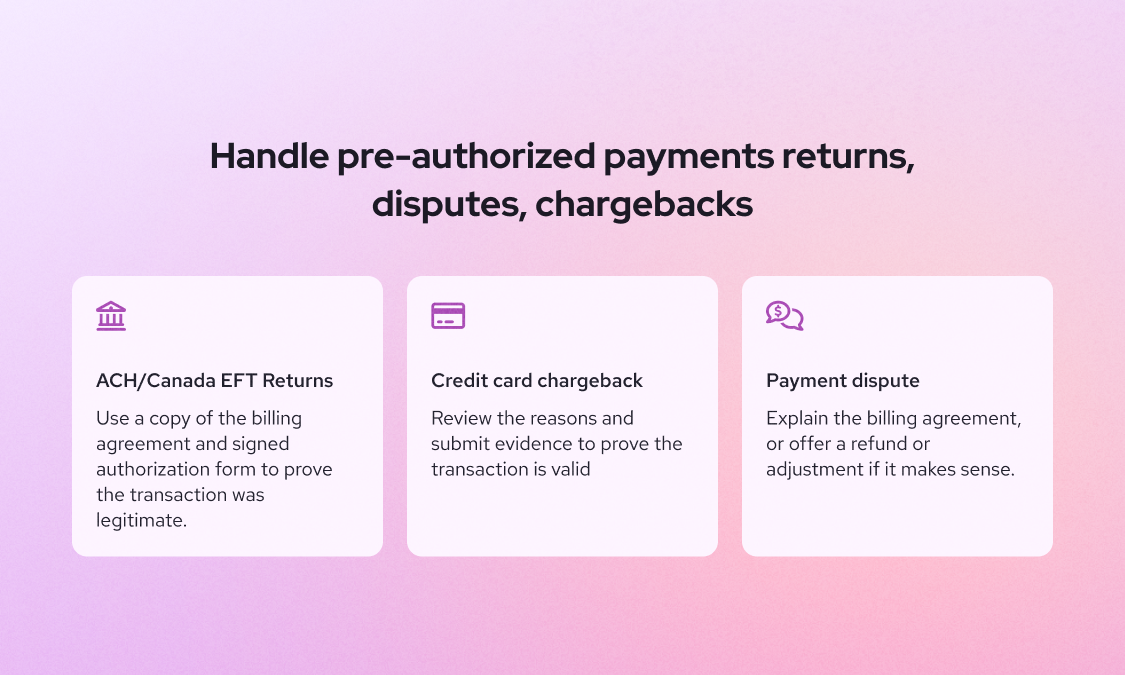
To reduce the risk of chargebacks and disputes, clinics should notify patients before charging the card and document the transaction details carefully. Those records and any notices sent to the patient are evidence if the clinic needs to respond to a dispute later.
When should clinics process card-on-file payments, and when shouldn’t they?
Clinics should process card-on-file payments when patients expect the charge and have clearly authorized it. Clinics should not charge a card on file when they are not sure the patient knows about or expects the charge. The rule of thumb is simple: process a card-on-file payment when the amount is clear, the patient has agreed to it, and the charge fits the clinic’s written policy. Do not process it when the amount is still unclear; the patient may dispute it, or the clinic cannot confidently say, “Yes, this patient knew this could happen.”
Examples of when clinics can process card-on-file payments
- When the patient is standing at the front desk paying a copay, the clinic can process a card-on-file payment.
- When the insurance claim has already been processed, and the clinic is charging the exact remaining balance the patient agreed to in advance, charging the card on file can also make sense.
- When the patient is responsible for a no-show fee or late cancellation fee under a signed agreement, the clinic can process the card on file.
That said, even a valid charge should not feel like a surprise. Even if the clinic’s policy allows card-on-file payments, it should still notify patients about upcoming charges and give them the option to pay another way if they prefer not to use the stored card. This best practice helps avoid the classic “I didn’t recognize this charge” dispute. In other words, a clinic may have permission to charge the card, but giving notice first is still the smarter move.
Examples of when clinics shouldn’t process card-on-file payments
- Clinics should not charge the card first and inform the patient later.
- If there is a sudden increase in the agreed payment amount, the clinic should not charge more than the previously agreed amount without reconfirming it with the patient.
- Clinics should avoid charging a stored payment method when the copay, deductible, or coinsurance is unusually large and likely to come as a major surprise to the patient.
- The clinic should not process a card-on-file payment if the patient has revoked authorization or if the authorization has expired.
- In some jurisdictions, clinics cannot require a credit card on file before emergency or medically necessary services.
What policies should healthcare clinics have for storing and processing credit cards on file?
Healthcare clinics should have a written card-on-file policy that explains:
- Whether the clinic stores payment tokens through a secure payment provider instead of raw card numbers.
- Which staff members are allowed to handle stored payment data, and under what conditions.
- Which types of charges are allowed, such as copays, deductibles, coinsurance, no-show fees, or post-insurance balances.
- How the clinic gets authorization, how long that authorization stays valid, and how patients can revoke it.
- How the clinic handles no-shows, late cancellations, refunds, and payment disputes in a clear and fair way.
1. How payment details are stored securely
The policy should state that the clinic stores payment tokens through a PCI-compliant payment provider, not raw card numbers. Staff should never write full card numbers in notes, spreadsheets, paper forms, or free-text fields inside the EHR. The policy should also make clear that sensitive authentication data, including CVV or CVC codes, must not be stored after authorization.
2. Who can access them
A good policy should explain which staff members are allowed to access card-on-file data and process payments. Access should be limited on a need-to-know basis. The policy should also prohibit sending card details through insecure channels such as email, fax, or text. In addition, it should explain when stored payment data is deleted and how the clinic securely destroys data that is no longer needed.
3. When the clinic is allowed to charge the card
The clinic should list the types of card-on-file charges it may process, such as copays, deductibles, coinsurance, no-show fees, late cancellation fees, or post-insurance balances. These terms should be disclosed when the patient agrees to keep a card on file. The policy should also explain when card-on-file payments are processed, when the clinic will notify the patient first, and what other payment methods are available.
4. How patient consent works
The policy should require a clear authorization form that tells patients exactly what they are agreeing to. The clinic should keep proof that the patient acknowledged the fees relating to the services, whether by signature, checkbox, or electronic consent. The policy should also spell out any charge limit that requires fresh approval, explain how long the authorization stays valid, and tell patients how they can revoke it. If the clinic later changes its cancellation rules, no-show fee, or post-insurance billing process, the policy should treat that as a consent update.
5. What happens if there is a cancellation
Finally, the clinic should clearly explain its cancellation, late cancellation, no-show, and refund rules. These terms should be disclosed at the time of agreement, and the clinic should keep proof that the patient received and acknowledged them. This matters because confusion is often what triggers patient complaints and payment disputes. When the rules are buried in fine print, patients are more likely to feel blindsided later.
When should clinics ask for consent to process stored patient credit cards?
Clinics should ask for consent before they store a patient’s card and before they use that stored card for any charge. If a clinic changes its no-show fee, cancellation window, balance threshold, or the timing of post-insurance charges, it should get the new consent from the patients. Clinics should also ask for consent again when the original authorization expires.
Clinics should also inform the patients about the type of charges they may process with stored credit cards. For example, copays, deductibles, coinsurance, no-show fees, or late cancellation fees. The authorization form should say that clearly. If the patients withdraw the authorization, the clinic should stop processing the stored card and request another card or payment method instead.
How can healthcare clinics prevent payment disputes after processing card-on-file payments?
Clinics prevent most card-on-file payment disputes by making charges easy to recognize, easy to verify, and hard to misunderstand. Healthcare clinics can prevent payment disputes by taking the following steps:
- Get clear authorization and keep proof: The clinic should be able to show a signed agreement proving that the patient accepted and authorized the clinic to charge the stored card. If the clinic cannot prove that the patient agreed to the card-on-file charge, the dispute becomes much harder to win.
- Notify patients before charging a stored card: Even when the clinic has permission to charge the card, it should still provide advance notice. By doing this, clinics can avoid “I didn’t recognize this charge” disputes.
- Make cancellation and refund terms easy to see: Patients should know what types of fees the clinic may charge to the card on file, such as no-show fees, late cancellation fees, copays, deductibles, or coinsurance. They should also know when refunds are allowed.
- Keep the accurate estimates: Big surprise bills often turn into disputes. For self-pay or uninsured care especially, clinics should keep estimates accurate. When there is an unexpected change to the estimate, the clinic should communicate it right away and confirm that the patient agrees to the new amount.
How to securely charge and store patients’ credit cards on file
If your clinic wants to keep cards on file, a secure option is Helcim Card Vault. Helcim says Card Vault securely stores customer card details, replaces the full card number with a token, and lets clinics reuse that saved card later for invoices, Virtual Terminal payments, or recurring payments.
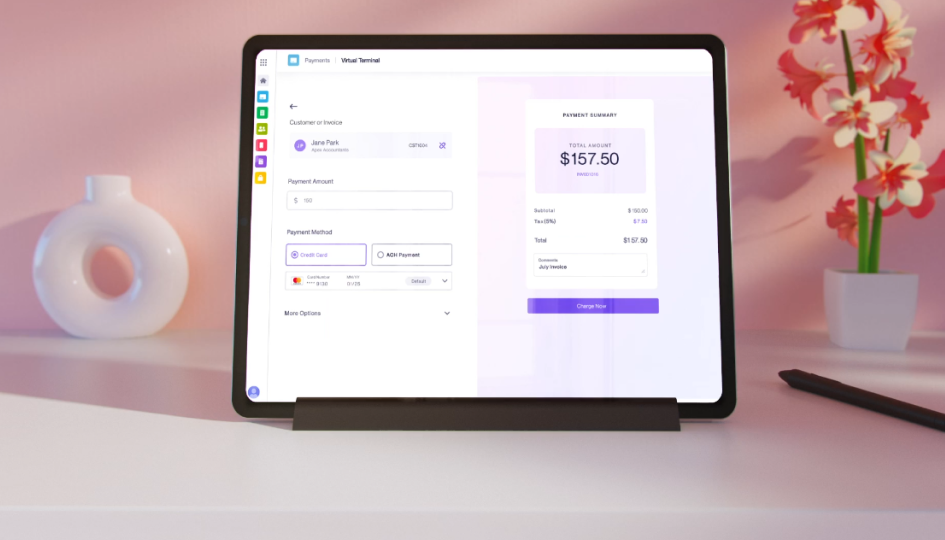
Once the card is stored securely, your team can use Helcim Virtual Terminal to process payments on a laptop, desktop, tablet, or phone with an internet connection. Helcim Virtual Terminal can process credit card and ACH bank payments. Your staff can use stored cards and, where enabled, ACH payments to collect authorized charges such as past due invoices, no-show fees, late cancellation fees, copays, deductibles, or coinsurance.

FAQ
Why do healthcare clinics ask patients to keep a credit card on file?
Clinics usually ask for a card on file to make billing easier and more predictable. It helps them collect copays, deductibles, coinsurance, and post-visit balances without sending repeated statements or chasing small balances for weeks.
Is it normal for a healthcare clinic to keep a patient’s credit card on file?
Yes, it is common in many healthcare settings. It’s a standard business practice, especially in areas where patient balances are harder to collect and practices want to reduce patient account receivables. Clinics still need to follow PCI rules, use secure storage such as tokenization or vaulting, and make the terms clear to patients.
Can healthcare clinics charge a stored credit card without notifying the patient first?
A clinic may have legal permission to charge a stored card if the patient already gave clear authorization for that type of charge. Even so, the clinics should provide advance notice.
When should a healthcare clinic avoid charging a stored card?
Clinics should avoid charging a stored card when the patient did not clearly authorize that type of charge, when the authorization has been revoked or expired, or when the clinic cannot prove the patient agreed to the policy. They should also pause when the patient is actively disputing the service or the bill, or when the amount is much higher than the patient reasonably expected.