
























In the world of high-ticket healthcare, asking a patient for a massive upfront payment is a great way to watch them walk out the door. Whether it’s a life-changing IVF journey or a complex dental reconstruction, the sticker shock is real. But there is a better way to manage your practice’s cash flow while keeping your patients motivated: milestone billing.
This article explores how to shift your clinic’s financial model from chasing hourly fees to celebrating clinical wins. We will break down exactly what milestone billing looks like in a medical setting, which industries benefit the most, and how to stay compliant while doing it. Most importantly, we’ll show you how to use Helcim’s tools to make these payments low-cost and automatic, so you can focus on the patient, not the paperwork.
What is milestone billing for healthcare services?
Milestone billing is a payment model where charges are triggered by the completion of specific, pre-defined clinical goals rather than a calendar date. It breaks a large treatment plan into smaller, digestible payments that occur only when a patient reaches a checkpoint in their care.
This model is a powerful tool for maintaining a healthy bank account and keeping your patient volume high. According to Gallup’s annual Health and Healthcare poll, a record 38% of Americans reported that they or a family member postponed medical treatment in the last year because of the cost. This isn't just for minor issues, either; the study found that 27% of those delaying care were doing so for a "very" or "somewhat" serious condition.
At Helcim, currently 15% of our merchant base consists of healthcare providers, so we see firsthand how flexible billing helps clinics keep their doors open. By tying payments to milestones, you lower the "sticker shock" for the patient while ensuring your clinic is paid before moving into the next, and often most expensive, phase of a treatment plan.
To see how this works in practice, let's break this down using a real-world example.
The Sarah scenario - Milestone billing for healthcare example
Imagine a patient like Sarah walks into your clinic. She needs a specialized recovery plan for a chronic injury that will cost $6,000 over several months.
- The Old Way: You ask for the full $6,000 upfront. Sarah sees a massive bill and hesitates to start. Alternatively, you bill her $200 every week. Now, Sarah feels the "pain" of a payment every time she walks in, regardless of whether she’s feeling better or worse that day.
- The Milestone Way: You charge Sarah $1,500 at her initial assessment to cover her equipment and setup. You charge the next $2,500 only once she regains 50% of her mobility. The final $2,000 is due when she successfully completes her rehab.
Now, every time Sarah’s card is charged, she is celebrating a triumph in her recovery. This isn't just a nice way to bill; it’s a business strategy. Practices that offer transparent payment structures often see a significant increase in case acceptance, as patients feel they are paying for results rather than just renting your time.
Which healthcare services are best suited for milestone billing?
Milestone billing works best for healthcare services that involve high out-of-pocket costs, multi-stage treatment plans, and clear clinical outcomes. It is the ideal middle ground for elective or specialized procedures where insurance coverage is limited and the project has a clear beginning, middle, and end.
Because these treatments often require the clinic to prepay for expensive supplies, like lab-grown crowns or fertility medications, milestone billing protects your cash flow. If a patient stops treatment halfway through, you haven't lost money on the materials for the next phase.
Here are the top industries where this model shines:
- Fertility Clinics (IVF): These journeys are naturally phased (stimulation, retrieval, transfer). Milestone billing allows parents-to-be to pay as they progress through each emotional and physical stage.
- Dental & Orthodontics: Large-scale cosmetic work or smile makeovers involve significant lab fees. Billing at the prep, temporary, and final seat stages ensures the clinic isn't fronting thousands in lab costs.
- Physiotherapy & Chiropractic Care: For long-term rehabilitation, tying payments to functional goals (like unassisted walking or full range of motion) keeps patients motivated to stick to their plan.
- Medical Research & Cosmetic Surgery: Any service where there is a clear before and after benefits from a payment structure that mirrors that transformation.
What are examples of billing milestones in a healthcare care plan?
Billing milestones are specific, measurable clinical events that trigger an invoice. Rather than billing for a session, you are billing for the completion of a phase, such as the delivery of a medical device, a successful lab result, or a functional physical achievement.
A well-structured milestone plan keeps the patient’s eyes on the prize. This strategy is rooted in a psychological principle known as the Goal-Gradient Effect. According to the behavioral design experts at Laws of UX, the tendency to approach a goal increases with proximity to that goal. In a clinical setting, this means that as a patient sees themselves getting closer to their triumph, their motivation to follow through with both their treatment and their payments actually ramps up.
By breaking a $6,000 plan into milestones, you reduce buyer’s remorse because each financial transaction is linked to a tangible feeling of progress. Instead of the pain of payment being a standalone event, it becomes a celebratory marker of getting healthier.
Let’s look at how three different practices might map this out, starting with a deeper look at the recovery plan for Sarah, the physiotherapy patient we introduced earlier.
1. Physiotherapy (The Sarah Scenario)
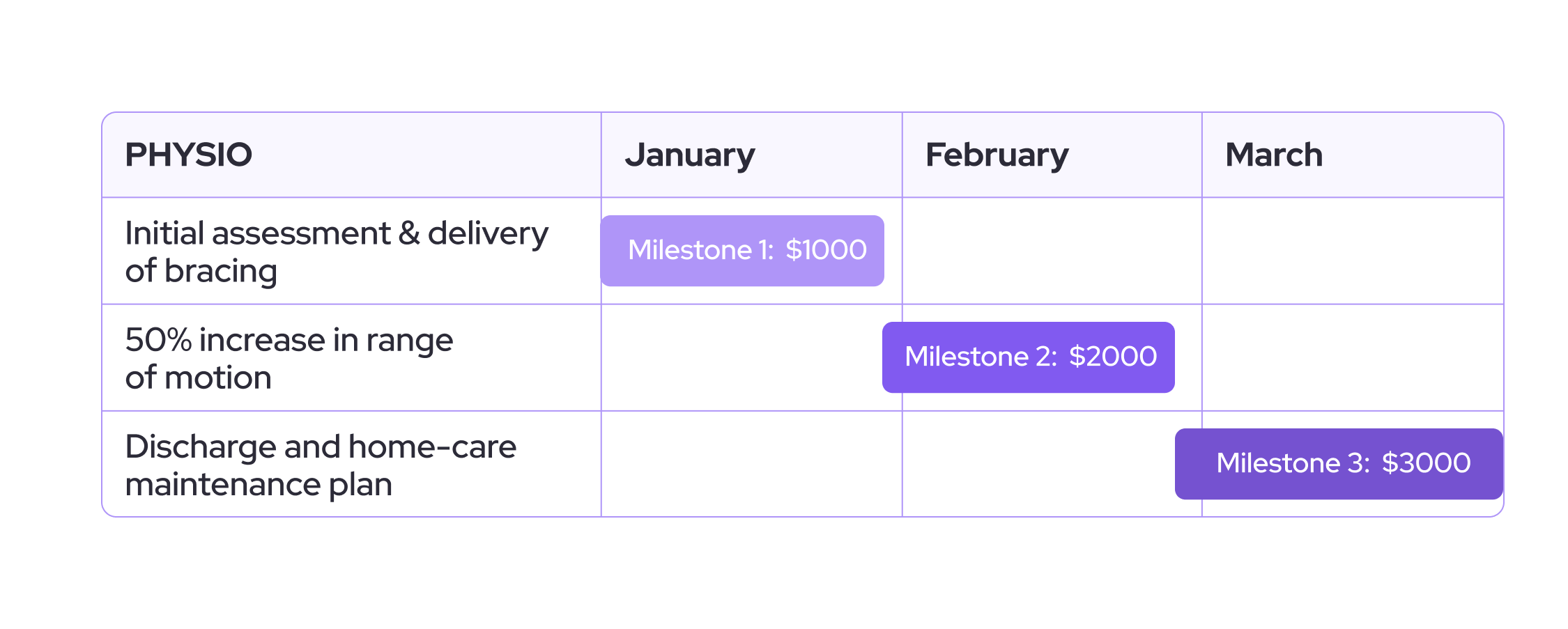
In our earlier example, Sarah was facing a long road to recovery for a chronic injury. By tying her payments to her actual physical triumphs, her $6,000 plan becomes a series of wins:
- Milestone 1 (The Kickoff): Payment for the initial assessment and the delivery of specialized bracing or equipment.
- Milestone 2 (The Midpoint): A payment triggered once Sarah achieves a 50% increase in range of motion, verified by clinical testing.
- Milestone 3 (The Triumph): The final balance due upon discharge and the transition to a home-care maintenance plan.
2. Cosmetic Dentistry (The Smile Makeover)
Large-scale dental work involves high lab fees and multiple appointments. Milestones protect the clinic's overhead while ensuring the patient is happy with the progress:
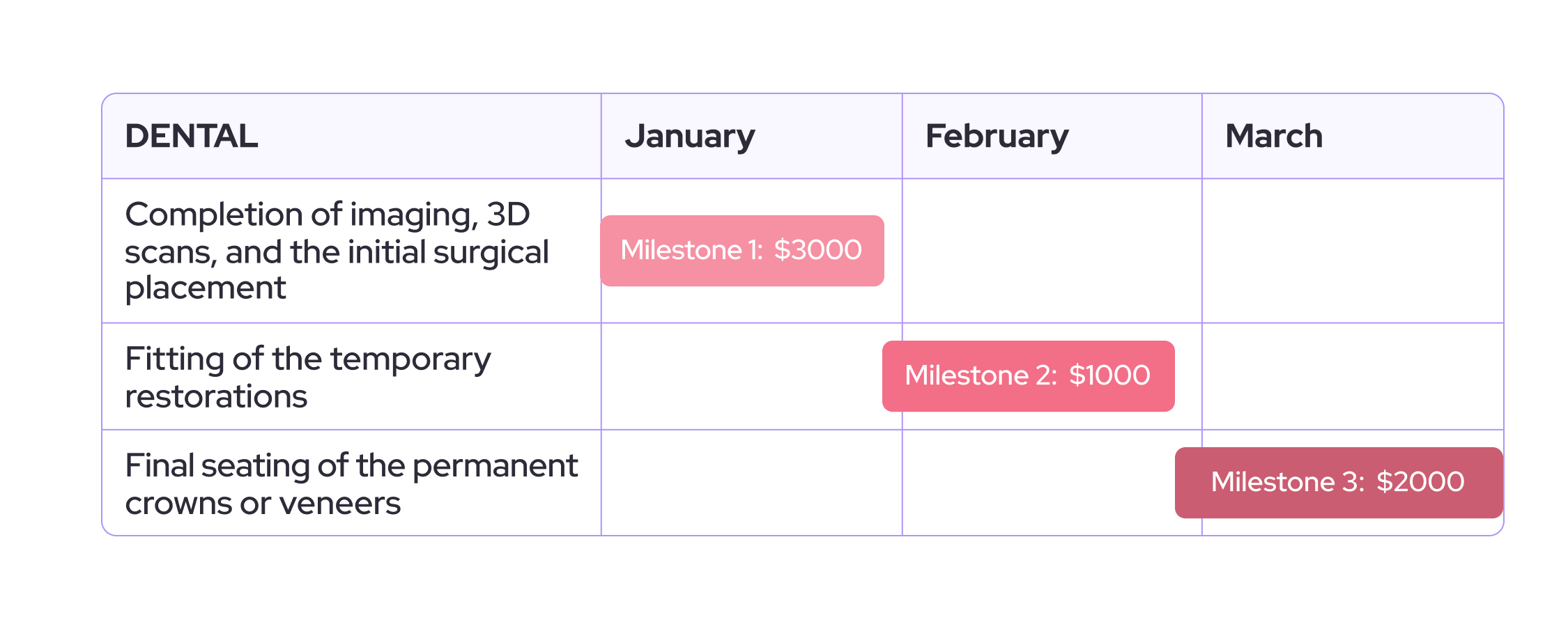
- Milestone 1 (The Foundation): Completion of imaging, 3D scans, and the initial surgical placement or tooth preparation.
- Milestone 2 (The Trial): Fitting of the temporary restorations. This ensures the patient is happy with the look and feel before the final permanent version is ordered from the lab.
- Milestone 3 (The Reveal): Final seating of the permanent crowns or veneers.
3. Fertility Clinic (The IVF Journey)
IVF is a deeply emotional and significant out-of-pocket expense. Breaking it down helps families manage the cost in parallel with the medical steps:
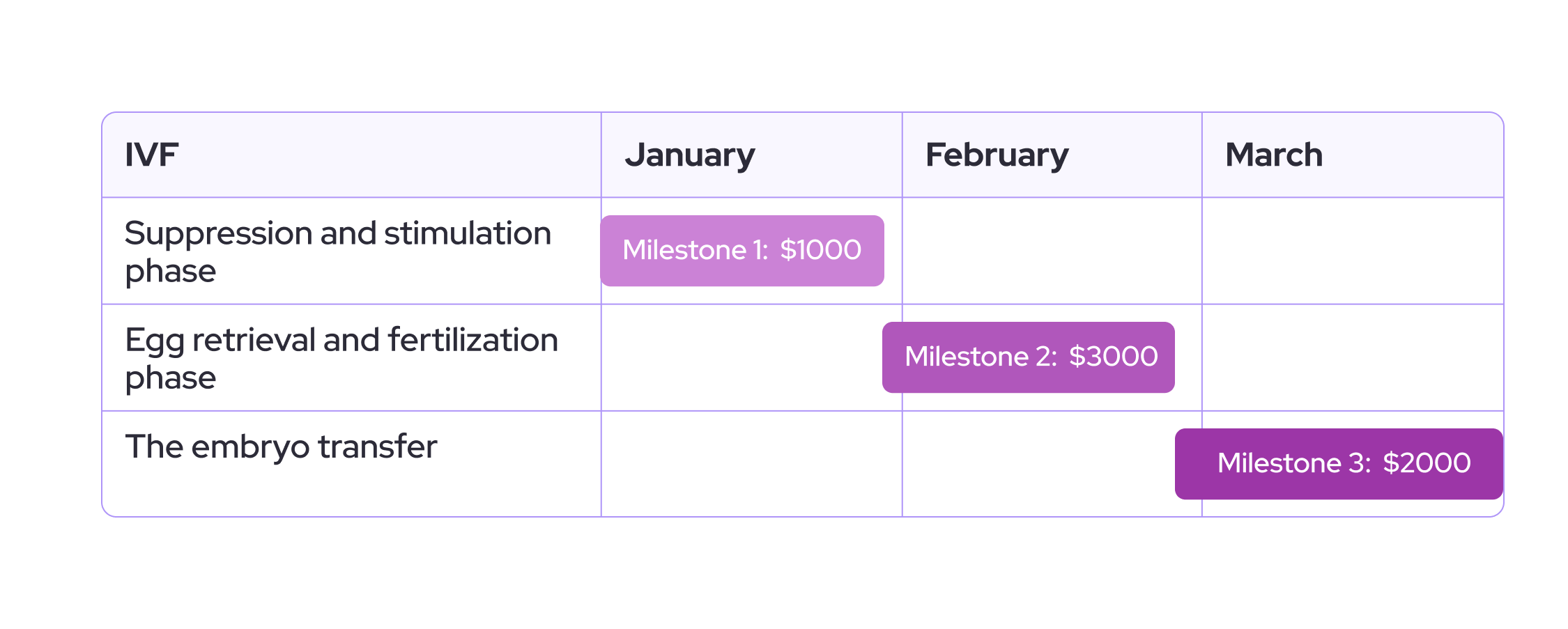
- Milestone 1 (The Preparation): Completion of the suppression and stimulation phase, once the patient is physically ready for the procedure.
- Milestone 2 (The Retrieval): The egg retrieval and fertilization phase conducted in the lab.
- Milestone 3 (The Transfer): The embryo transfer procedure and the first two weeks of follow-up care.
How should clinics decide the amount due at each billing milestone?
To determine the right milestone amounts, clinics should focus on balancing their own out-of-pocket costs for supplies with the patient's perceived value of each clinical phase. You aren't just splitting a bill in three; you are creating a financial roadmap that mirrors the physical work being done.
Properly structured payments prevent the practice from becoming a “bank” for the patient. Studies show that when patients have skin in the game early on, they are significantly less likely to drop out of long-term treatment plans. By aligning the largest payments with the most resource-heavy parts of the plan, you protect your margins.
Here is a summary of how to build your milestone pricing:
- Calculate your hard costs for each phase
- Front-load the initial deposit
- Align payments with high-value triumphs
- Draft a treatment & payment roadmap
- Hold a dedicated financial consultation
Calculate your hard costs for each phase
Before you set a price, look at your expenses for each stage of the plan. In a dental makeover, Milestone 1 might involve expensive 3D imaging or surgical guides. In IVF, the first phase involves high-cost medications. Your milestone amount should, at a minimum, cover these tangible costs so your practice never runs a deficit during the treatment.
Front-load the initial deposit
The first milestone should usually be the most significant. This covers the administrative setup, the initial diagnostics, and secures the patient’s commitment. A common rule of thumb in high-ticket healthcare is to ensure the first milestone covers 30–50% of the total treatment cost. This ensures that even if a patient moves away or stops treatment unexpectedly, your overhead is already paid for. Understanding how to structure a down payment can help you determine the right amount to collect upfront.
Align payments with high-value triumphs
As we saw with Sarah’s physiotherapy, patients feel best about paying when they feel they’ve achieved something. If Milestone 2 is regaining mobility, the patient is happy to pay because they can feel the results. If you bill $2,000 for administrative processing, it feels like a chore. Always name your milestones after the clinical benefit the patient receives.
Draft a treatment & payment roadmap
Don't just tell them the price; show them. Create a one-page document that lists the clinical milestone on the left and the payment amount on the right. Seeing that the $6,000 total is actually three distinct payments of $2,000—each tied to a specific result—makes the cost feel logical rather than arbitrary.
Hold a dedicated financial consultation
Never discuss the milestone plan while the patient is in the exam chair or still in their paper gown. Have a dedicated space—like a private office or a quiet consultation room—to walk through the roadmap. This is where you explain that payments are triggered by progress, which gives them a sense of control, transparency, and empathy.
How to build a milestone billing system that scales
Setting up a milestone-based system isn't a one-size-fits-all project because a high-volume chiropractic clinic operates very differently than an IVF surgical center. You need a payment partner that offers a toolkit, not just a terminal. The goal is to find a processor that combines low, transparent costs with flexible software so you can pick the right tool for each specific patient journey.
At Helcim, 15% of our active merchant base is in the healthcare space, which has taught us that every practice needs a slightly different setup. Here is how you can use a diverse payment stack to make milestone billing work for you:
- Use Online Invoicing for event-driven milestones
- Leverage the Helcim Card Vault and Helcim Virtual Terminal for healthcare "Card-on-File" charges
- Switch to ACH Bank Transfers for high-ticket totals
- Automate with Recurring Billing for hybrid care plans
- Reduce overhead with Interchange Plus pricing
Use Online Invoicing for event-driven milestones
For many clinics, a milestone is reached at an unpredictable time—like when Sarah finally hits her mobility goal. Helcim’s Online Invoicing allows you to send a professional, branded invoice the moment that goal is met. The patient receives an email or text, clicks a payment link, and pays instantly. This keeps the momentum going without requiring an awkward billing talk at the front desk. Learning how to create a professional invoice can help you make a great impression with every billing milestone. Learning how to create a professional invoice can help you make a great impression with every billing milestone.
Leverage the Helcim Card Vault and Virtual Terminal for "Card-on-File" charges
If you want to remove all friction, you can combine the use of Helcim’s Card Vault with the Virtual Terminal. During the initial consultation or intake form, you securely store the patient’s payment information in the Vault. Then, once a clinical milestone is reached, your staff simply pulls up the patient’s profile in the Virtual Terminal and processes the payment instantly. Your milestone agreement gives you the payment authorization to do this behind the scenes, creating a concierge experience where patient never has to dig through her purse for a card while she’s trying to focus on her recovery.
Switch to ACH Bank Transfers for high-ticket totals
In industries like IVF or major reconstructive dentistry, milestones can easily exceed $5,000. Paying a percentage-based credit card fee on those amounts eats into your practice's margin quickly. By switching to ACH Bank Transfers, you pay a significantly lower rate.
Let’s do the math: Imagine a $5,000 milestone payment for a dental implant:
- Credit Card (at 2.5%): You pay $125.00 in fees.
- Helcim ACH (at 0.5% + $0.25): You pay $25.25 in fees.
- The Savings: You keep an extra $99.75 in your pocket for a single transaction. Over the course of a year, that's enough to fund new equipment or staff bonuses.
Automate with Recurring Billing for hybrid care plans
Some milestones are time-based rather than outcome-based. For example, a Chiro rehab plan might have a Phase 1 that lasts exactly three months. You can use Helcim’s Recurring Billing to automate these payments, ensuring your cash flow remains steady without manual administrative work every month.

Reduce overhead with Interchange Plus pricing
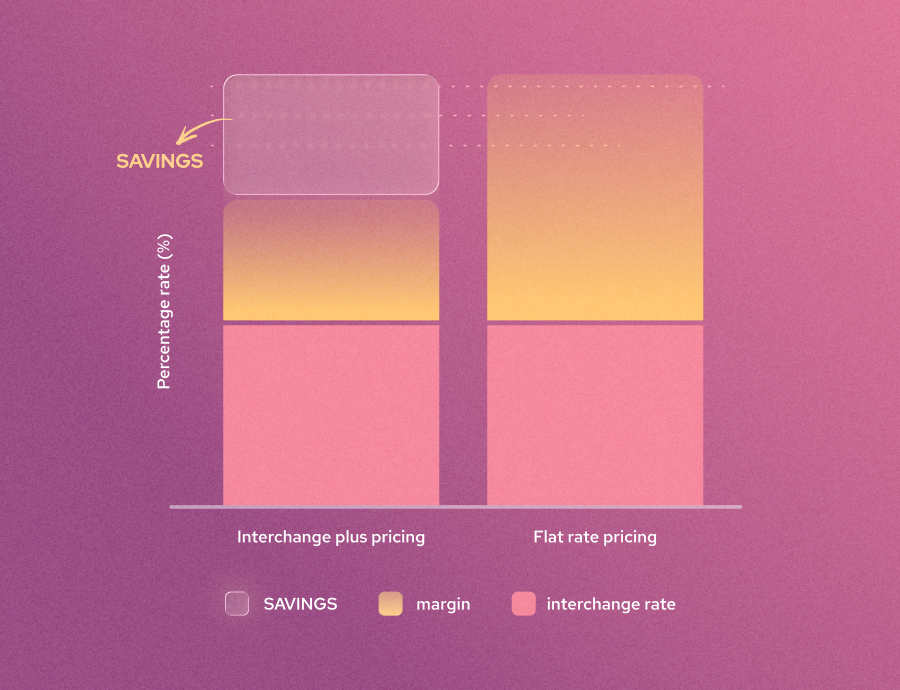
Most processors hide their margins in "tiered" or "flat-rate" pricing, which often results in healthcare clinics overpaying. Helcim uses Interchange Plus pricing, the most transparent model in the industry. We pass the direct cost from the card brands (Visa, Mastercard) straight to you and only charge a small, transparent margin. For a high-revenue clinic, this transparency can save thousands of dollars a year in unnecessary markups—money that is better spent on patient care.
What cancellation, refund, and rescheduling rules should clinics set for milestone billing?
For a milestone billing model to work, your financial guardrails need to be as clear as your clinical ones. Because this model relies on the completion of specific stages, a last-minute cancellation doesn't just empty an appointment slot, it halts a multi-step revenue chain.
Establishing clear rules ensures that if a patient needs to reschedule her final appointment, your clinic isn't left absorbing the cost of the specialized equipment you already ordered for her.
Here is how to structure your rules and the tools to manage them:
- Define non-refundable milestones within your practice management software
- Set a 48-hour rescheduling window within your practice management software
- Create a prorated exit clause within your practice management software
- Download the Helcim Payments Extension to get paid for less with your existing software
Define non-refundable milestones
In healthcare industries like Dental or IVF, the first milestone often covers heavy upfront costs like lab fees or high-end medications. Your policy should clearly state that once a milestone is reached and the associated lab work is ordered, that portion of the fee is non-refundable. Having a signed paper agreement or a digital agreement on file in your practice management software ensures that both you and the patient are on the same page before a single dollar is spent.
Set a 48-hour milestone rescheduling window
Milestone appointments (like a surgical seating of a dental bridge) usually require more staff and longer time slots than a standard check-up. Most practice management softwares (PMS) like Ava, Eaglesoft or Jane App allow you to bake these rules into your booking flow, automatically alerting patients of a fee if they move a milestone appointment without enough notice.
Create a prorated exit clause
Sometimes life happens, and a patient might need to stop treatment halfway through. Your agreement should explain exactly how a refund would work for work in progress. For example, if Sarah stops her physio plan after Milestone 2, she is responsible for Milestones 1 and 2, but won't be charged for the final phase.
Download the Helcim Payments Extension to get paid for less
You shouldn't have to choose between a software you love and a payment processor that saves you money. Many clinics use platforms like Jane App or Simple Practice to handle their scheduling, charting, and cancellation policies because those tools are built specifically for health professionals.
The bad news is that these software often come with high, flat-rate fees. Instead of uprooting your workflows to get paid for less, clinics accepting payments with Helcim have the option to use the Helcim Payment Extension. This Chrome browser extension sits right on top of your existing PMS and ingrates payment records from your management software with Helcim.
- The Benefit: You keep the scheduling guardrails, no-show protections, and workflows you already know without having to sacrifice on costs to accept payments.
- The Savings: When it’s time to actually collect on that milestone, you process the payment through the Helcim Payment Extension. This allows you to access Interchange Plus pricing and lower rates without ever having to leave the patient’s profile in your clinical software. It’s the ultimate hack for a clinic that wants elite management tools and low-cost processing.

What compliance and regulatory requirements apply to milestone billing?
Milestone billing involves handling sensitive patient data and financial agreements, which means your practice must stick to specific legal frameworks. Staying compliant isn't just about avoiding fines; it’s about protecting the trust you’ve built with patients like Sarah. If a patient feels their financial data isn't secure, they won't feel comfortable committing to a long-term care plan.
When you move to a milestone model, you are essentially entering a deferred payment contract. Because of this, you need to be aware of how medical privacy laws (HIPAA) intersect with financial protection laws. In fact, non-compliance with billing regulations can lead to penalties ranging from $100 to $50,000 per violation, depending on the severity of the oversight.
Here is a summary of the regulatory areas you need to manage:
- HIPAA & Privacy Rules
- PCI-DSS (Payment Card Industry Data Security Standard)
- Truth in Lending Act (TILA) & Regulation Z
- The No Surprises Act (Good Faith Estimates)
HIPAA & Privacy Rules
While payment processing itself has some exemptions, the communication surrounding your milestones—like invoices and emails—does not. You must ensure that any Protected Health Information (PHI) on an invoice is kept to a minimum. Helcim is HIPAA compliant, meaning we provide the necessary safeguards to protect your patient's data. We offer a Business Associate Agreement (BAA) to our healthcare merchants, which is a legal requirement for any practice looking to remain HIPAA compliant while processing payments.
PCI-DSS (Payment Card Industry Data Security Standard)
Since milestone billing often involves keeping a card on file to charge Sarah when she hits her checkpoints, you must be PCI compliant. Many payment processors charge a compliance fee or a PCI non-compliance fee that can add hundreds of dollars to your annual costs. Helcim is PCI-DSS Level 1 Compliant, and unlike other processors, we do not charge any fees for this. We provide you with the tools to stay compliant, like the Helcim Card Vault, at no extra cost, ensuring that actual card data never touches your local servers.
Truth in Lending Act (TILA) & Regulation Z
If you are breaking a large bill into installments, you need to be careful about how you disclose those costs. TILA requires you to provide a written disclosure of the total cost and any finance charges. Even if you aren't charging interest, having a clear, signed Milestone Agreement protects you if a patient disputes a charge later. It serves as proof that they agreed to the payment schedule based on their clinical progress.
The No Surprises Act (Good Faith Estimates)
As of 2022, healthcare providers must provide a Good Faith Estimate (GFE) to uninsured or self-pay patients. Since the industries we discussed (Dental, IVF, Physio) often involve out-of-pocket costs, you are legally required to give the patient a clear breakdown of the total expected cost before treatment starts. A milestone roadmap is a perfect way to satisfy this requirement because it lays out the financial journey in a transparent, easy-to-read format.
From clinical plans to financial wins
Every clinical journey is a series of milestones. By shifting your billing model to match that progress, you do more than just stabilize your cash flow, you build a practice centered on transparency and patient trust.
When you bill for triumphs, patients like Sarah stay motivated because they can see and feel the value they are paying for. With Helcim’s toolkit and your existing Practice Management System working together, you can stop chasing payments and get back to what matters most: helping your patients reach their next big win.

FAQs
How should clinics explain milestone billing to patients before treatment begins?
You should explain milestone billing as a "Pay-as-you-Progress" roadmap during the initial consultation. Focus on how this model benefits the patient by breaking down a large total into manageable chunks tied to their actual recovery or results.
Patients are often wary of hidden fees, and transparency is the best antidote. According to research on patient payment trends, 74% of people are more likely to pay their medical bills when offered flexible payment plans rather than a lump sum. Furthermore, when patients are satisfied with the transparency of the billing process, they are significantly more likely to pay their balance in full.
How should clinics handle cancellations before a billing milestone is reached?
Clinics should handle pre-milestone cancellations by having a tiered kill fee or holding fee that covers the administrative time and any custom supplies already ordered. Since milestones are often weeks or months apart, you need to protect the work that happens behind the scenes between payments.
For example, if a dental patient cancels their Permanent Seating appointment, the clinic has likely already paid the lab fee for the crown. Your policy should state that if a cancellation occurs after a specific clinical step (like a 3D scan), the patient is responsible for the hard costs incurred up to that point. Using your Practice Management System (PMS) like Ava to automate these reminders ensures the patient knows the stakes of a late cancellation before it happens.
How should clinics handle refunds if a patient stops care early?
Clinics should handle early-exit refunds by calculating the work in progress and refunding only the unearned portion of the most recent milestone payment. You never want to be in a position where you are refunding a milestone that has already been achieved.
If Sarah decides to move to a different city halfway through her physio plan, she shouldn't get a refund for the Initial Assessment or the Mobility Goal she already hit. Those milestones are completed. However, if she prepaid for a milestone that hasn't started yet, issuing a prompt refund is the right move. Using Helcim’s Merchant Platform, you can issue these partial refunds in seconds, ensuring the patient leaves with a positive impression of your practice’s integrity—which protects your reputation and your online reviews.