
-
Content
Last Updated on June 26, 2025 by Alexis David
Getting paid on time can be essential to the success of any small or medium-sized business. However, when invoices are unpaid, it not only affects your cash flow but could also damage customer relationships and lead to costly debt collection experiences if you don’t take action.
Here are some considerate ways to get those outstanding invoices paid faster.
What is an outstanding invoice (unpaid invoice)?
Put simply, an outstanding invoice is a request for a payment that has not yet been paid. From the moment you issue it, even if the payment due date hasn’t arrived, the invoice stays “outstanding” until you receive full payment.
You usually send an invoice once you’ve finished a project, delivered goods, or completed a service. That invoice will include a payment term (for example, “net 30 days”). If the customer pays within that window, the invoice moves from outstanding to paid. If they miss the deadline, the outstanding invoice becomes an overdue invoice.
What is the difference between outstanding invoices, overdue invoices, and receipts?
Outstanding invoice (unpaid invoice): An invoice is “outstanding” from the moment you send it until you receive the full outstanding payment. Even if the due date hasn’t arrived, the customer still owes you money.
Overdue invoice (past due invoice): Once the due date passes without payment, your outstanding invoices become overdue payments. At this point, you can apply late fees, charge interest, or follow up to encourage clients to pay overdue invoice payments (Learn how to collect overdue invoices faster).
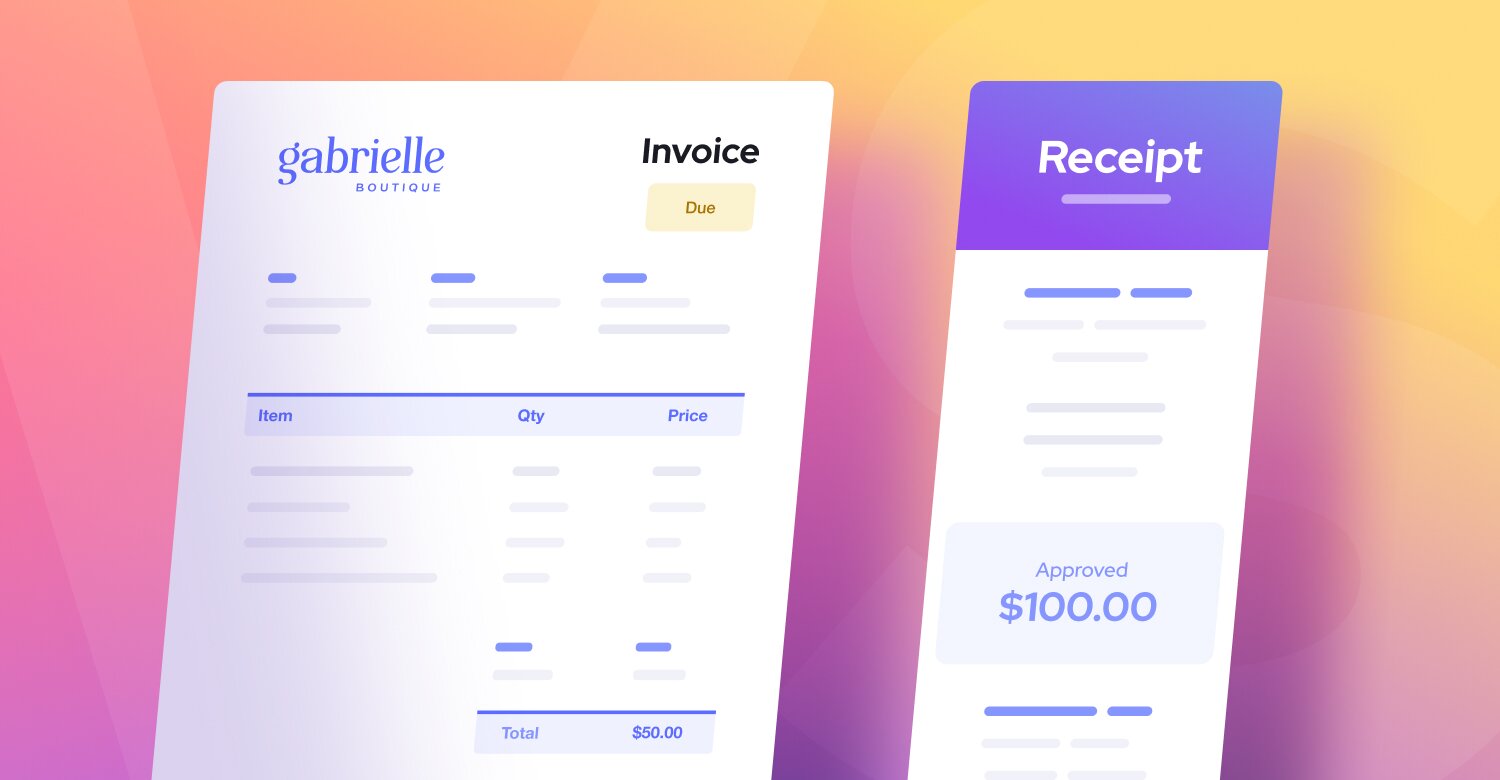
Receipt: A receipt is proof of payment. You issue it after you’ve received an invoice payment. It shows what was billed, how much was paid, and when, so both you and your customer have a clear record that the invoice is settled.
How do outstanding invoices affect your business and profitability?
Every unpaid invoice feels like a tiny loan you never asked for. When money sits unpaid, it chips away at your cash flow and eats up your time.
- Chasing payments eats into your day: You’re digging through old emails, hunting down purchase orders, and sending polite reminders, over and over. Those hours add up. In fact, 65% of businesses spend about 14 hours a week on outstanding invoice collections alone.
- Lost hours mean lost focus on growing your business: Instead of pitching new clients or improving your service, you’re stuck in back-and-forth emails. That can damage your reputation. Clients notice when you’re too busy chasing their money to deliver your best work.
- Unpaid invoices also force you to tap savings or take on short-term debt to cover bills: Suddenly, your profit margin shrinks, not because you did bad work, but because cash is trapped in limbo.
Keeping invoices moving isn’t just about staying afloat. It’s about freeing up your time, protecting your reputation, and making sure every job you complete actually pays.
What are the causes of the outstanding invoice payment?
Outstanding invoices usually happen for a handful of reasons:
- Your client is having cash flow problems
- The invoice is incorrect or confusing
- It was sent to the wrong person
- Clients genuinely just forgot
- Your invoice lands in a crowded inbox, spam or promotion folders
It’s rarely personal, but it always impacts your business. In fact, studies show that over half of all invoices in the U.S. are paid late, creating a ripple effect of financial stress for business owners.
Understanding why an invoice is late is the first step to fixing the problem.
1. Your client is having cash flow problems
This is one of the most common reasons for late payments. Your client isn't trying to avoid paying you; they're likely waiting for their own customers to pay them. It’s a domino effect. Small businesses, in particular, often operate on tight margins, and a delay on their end directly causes a delay on yours. In these situations, open communication is key to understanding their situation and finding a solution.
2. The invoice is incorrect or confusing
Mistakes happen, but an error on your invoice is a surefire way to delay payment. A wrong purchase order number, an incorrect amount, or a missing project detail can cause an invoice to get stuck in the client's accounting department. According to research, a staggering 61% of late payments are due to incorrect invoices. It’s a friendly payment reminder to double-check every detail before you hit "send."
3. It was sent to the wrong person
Even in a small business, the person who loves your work isn't always the one who pays the bills. You might be dealing directly with the small business owner, but they could have a partner or a part-time bookkeeper who actually handles all the payments. It's a simple communication hiccup that can cause frustrating delays.
4. They genuinely just forgot
Let's be honest, people get busy. Your client is juggling dozens of tasks, and your invoice might have simply slipped their mind. It’s usually not intentional. Often, a polite invoice reminder is all it takes to jolt their memory and get the payment process started. This is why a consistent follow-up process is so important, it keeps your payment top-of-mind.
5. Lost or buried emails
When your invoice lands in a crowded inbox, a vague subject line or missing call to action can bury it, and if you send invoices from your marketing email address which is tagged as as Promotions or Spam by Google, your invoices can vanish into those folders before your client ever sees them.
6 tips to collect outstanding invoices faster
Efficient invoice tracking and management can help to ensure your invoices are paid on time and don’t start to hold up your cash flow and administrative efforts tracking them down. Below are 6 tips to collect outstanding invoices faster:
- Craft clear, professional invoices to reduce confusion and build trust
- Use invoicing tools with automated reminders to stay one step ahead
- Implement advanced payment processing to give clients more ways to pay
- Align your internal teams to avoid miscommunication and delays
- Follow up with a human touch to protect relationships while pursuing payment
- Offer payment plans or grace periods to support clients during tough times
1. Craft professional invoices
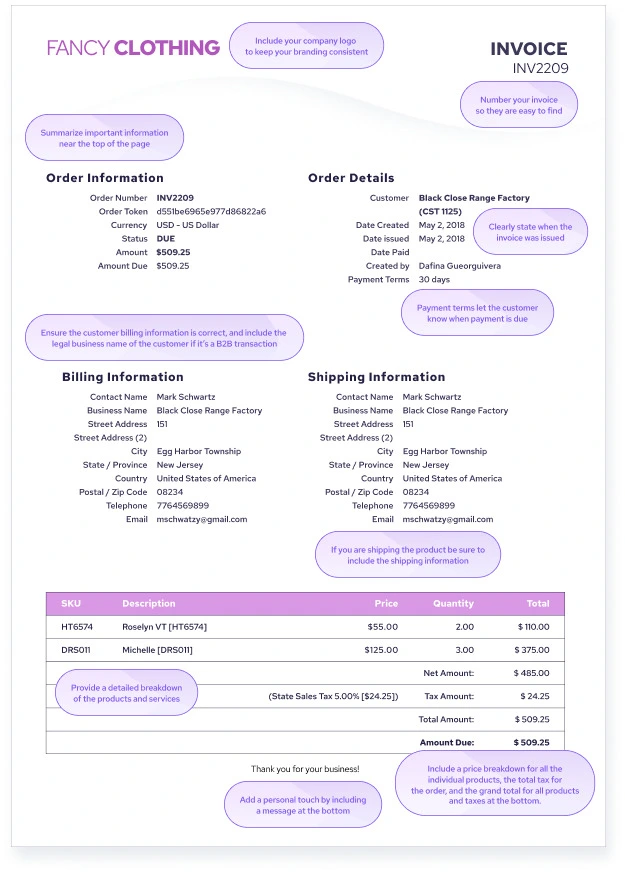
Your invoice is like a final handshake after a job well done. And just like a firm handshake, it leaves an impression. A clear, polished invoice shows your customer you’re organized, professional, and serious about getting paid. Make sure it checks all the right boxes before you send it out:
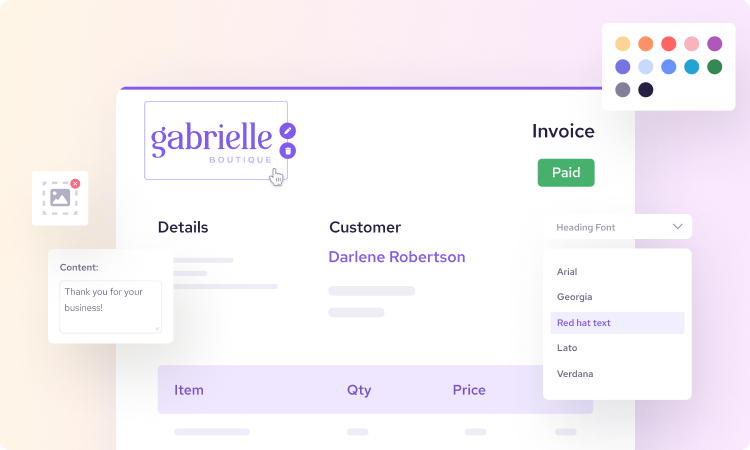
- Your company name, logo, and branding: Place these at the top so it’s instantly recognizable.
- The word “Invoice” is clearly written: No confusion about what this document is.
- Key numbers: Include service or delivery dates, the invoice issue date, invoice numbers, and any reference numbers.
- Detailed breakdown of charges: List products or services, quantities, rates, materials, taxes (like GST), and total cost.
- Due date: State when payment is expected. Be specific.
- How to pay: Include all payment options and note processing times. For example: “Credit card payments may take 2–3 days to process,” “To set up ACH payments, provide your bank info at checkout—allow 3–5 days for approval,” “If paying by cheque, mail it at least 15 days before the due date to allow for processing.”
- Late fees or penalties: Make your terms clear, so they know what happens if they miss the payment deadline.
- Contact information: Include a name, email, and phone number in case they have questions.
- A personal touch: Add a thank-you note or short message to show appreciation and encourage repeat business.
P.S. First time writing an invoice? Visit our article for more tips on writing a professional invoice.
2. Start using an invoicing tool with automatic reminders
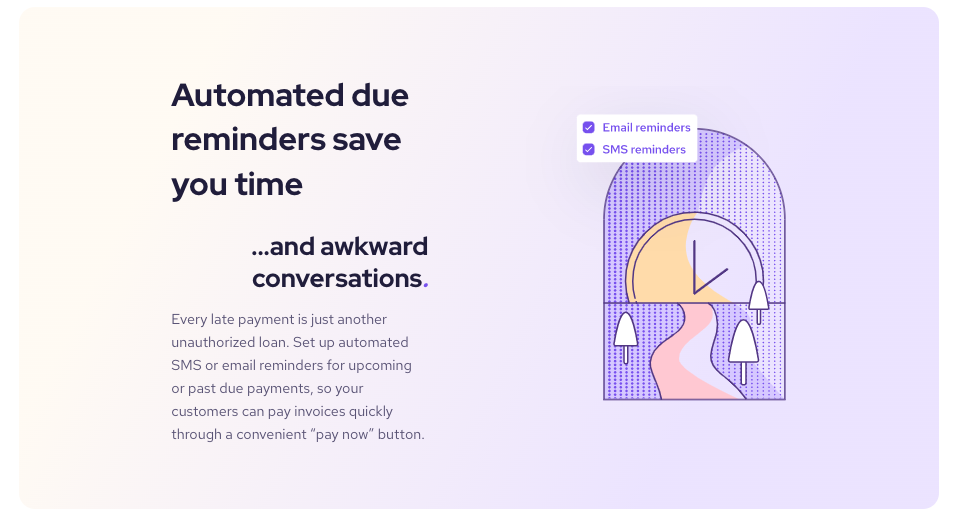
When unpaid invoices pile up, your cash flow starts to buckle. That can hold you back from covering expenses, paying your team, or investing in your business. A good invoicing tool automates the whole process. You can:
- Auto-generate invoices so you don’t forget to send them
- Track unpaid and partial payments in real-time
- Schedule email or SMS reminders for clients drowning in unread emails
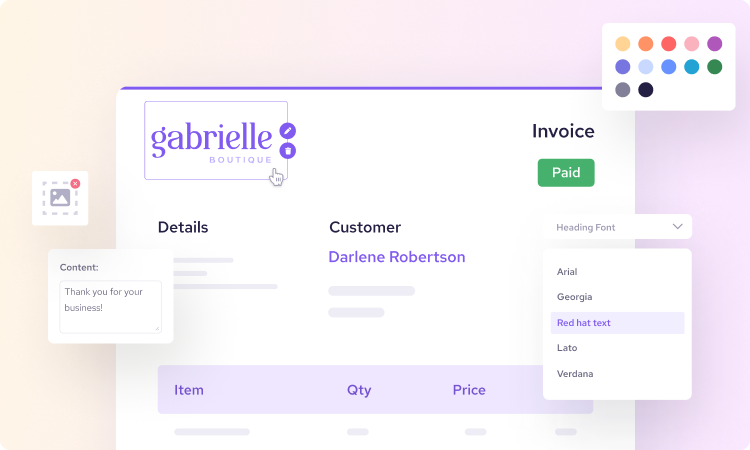
- Use templates that include all the key details
- Enable recurring billing for subscription or ongoing services
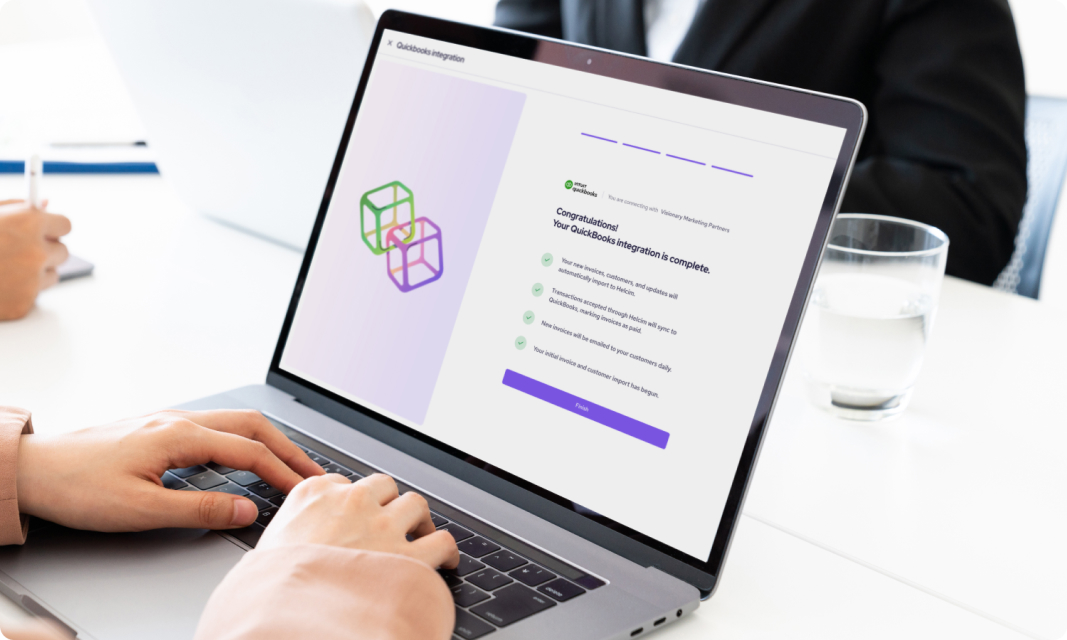
- Sync everything with your customer portal so clients can view and pay easily
When unpaid invoices pile up, your cash flow starts to buckle. That can hold you back from covering expenses, paying your team, or investing in your business. According to Antonette El Baz, founder and CEO of AE Pinnacle Accounting, some businesses lose up to 5% of their annual revenue from late or lost invoices alone.
"An invoicing tool or a new invoicing strategy can greatly improve the speed and accuracy of invoicing processes, leading to prompt payments and a healthier cash flow," says El Baz.
When you bring in the right tools, you spend less time chasing payments—and more time growing your business.
3. Implement advanced payment processing solutions
Even the best invoice won’t get paid if the payment process is clunky. That’s where modern payment solutions come in, they turn “I’ll get to it later” into “paid in full.” Look for features like:
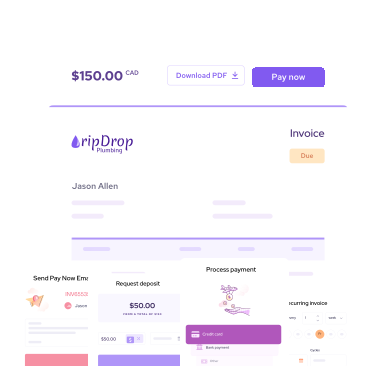
- A “Pay Now” button right on the invoice
- Secure payment links with a trusted gateway
- Saved payment methods for faster future checkouts or card-on-file payments
- Flexible options like credit cards, ACH bank transfers, and digital wallets
- Automated reminders by email or SMS
Mark Chen, founder and CEO of BillSmart, learned this the hard way. “When I first started, I didn’t have a good way to remind customers about their outstanding balances,” he says. “I had to hack something together with Zapier and Zoho Invoice. I’m glad there are solutions now, like Helcim, that handle this for you.”
Once he added smart payment tools, including reminders and multiple ways to pay, he saw real results:
“I reduced my time to get paid by 10 days and increased my collection rate by 10%.”
That’s the power of combining invoicing with smart payment processing. It helps you collect money faster, improves customer satisfaction, and keeps your books clean.
When paying is easy, getting paid is too. Investing in better payment tools not only improves your cash flow, it removes the friction that often turns outstanding invoices into overdue ones.
4. Find alignment within your organization
It’s easy to pin late payments on your accounting team, but the truth is, that invoicing usually involves more people than you realize. When different departments handle quotes, delivery, and invoices, things get messy. To fix this, start by aligning your team on high-priority invoices. Whenever possible, keep the same team members involved from start to finish so your customer has a consistent experience.
Your finance team might be leaving voicemails and firing off reminder emails, but if they’re missing key context from sales or operations, they’re chasing payment with one hand tied behind their back.
When procurement, operations, and accounting don’t communicate, details like pricing updates, scope changes, or delivery delays fall through the cracks. That confusion can frustrate customers and stall payment altogether.
Fixing this starts with making sure everyone involved in the customer journey, sales reps, project leads, and billing staff, shares the same info and timeline. That way, your invoices are accurate, timely, and backed by a shared understanding of what was delivered.
5. Follow up with a human approach
Don't forget to bring a human touch to your follow-ups. If a client hasn’t paid, check in with your sales or procurement lead first. Make sure the original terms still align with what the client expects. Then, follow up with the client personally, especially if you have an existing relationship. A warm, direct conversation can often resolve an issue faster than another generic reminder email.
6. Offer payment plans or grace periods when it makes sense
Sometimes your clients face cash flow issues or unexpected expenses and can’t pay right away. In these cases, offering a payment plan or a short grace period, can make all the difference.
For example, you might suggest breaking up a large invoice into two or three smaller payments. Or you could waive late fees if they pay within a specified grace period.
Payment plans or grace periods show that you’re willing to work with your client to find a solution. That kind of goodwill builds stronger relationships and can turn one-time clients into loyal, long-term ones.
Of course, flexibility has its limits. If a client is consistently late or ignores your outreach, it may be time to enforce stricter payment terms or pause future work until the balance is cleared.
How to politely follow up on an unpaid invoice
A polite follow-up starts with the assumption that it’s just a mistake or oversight. Keep your tone respectful, professional, and focused on resolving the issue—not assigning blame. Here’s an example:
Subject: Quick reminder – Invoice #12345 due MM/DD/YY
Hi Client's Name,
I hope you're doing well. I wanted to check in regarding Invoice #12345, which was due on MM/DD/YY. If it’s already been processed, feel free to disregard this note. Otherwise, please let me know if you need another copy or if there’s anything holding it up.
Thanks again, and I appreciate your attention to this!
Best,
How long should you wait to receive an outstanding invoice payment?
You should wait until the due date specified in your payment terms, which is most commonly 15 or 30 days. There isn't a single "right" amount of time to wait, because it all comes down to the agreement you made with your client before the work started. Without clear invoice payment terms, you're just guessing and hoping.
Setting clear payment terms is your first line of defense against late payments. Terms like "Net 15" (payment due in 15 days) or "Net 30" (due in 30 days) are extremely common. Choosing a shorter term like Net 15 can help improve your business cash flow, but Net 30 is often seen as a courteous standard in many industries.
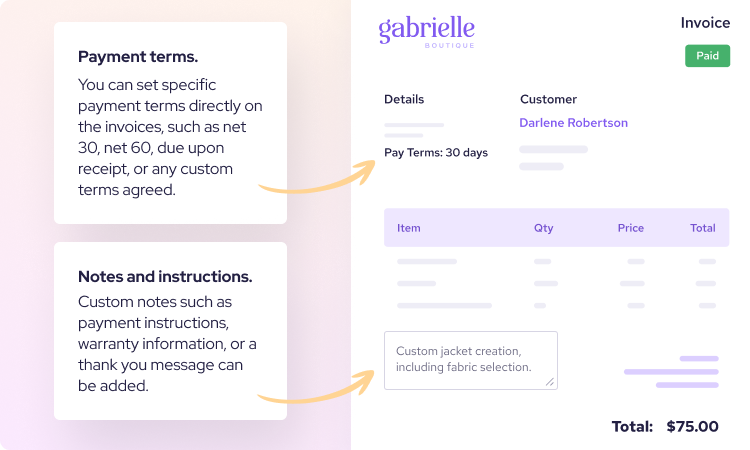
The key is to have this conversation upfront and ensure the due date is clearly printed on the invoice. Don't leave it open to interpretation.
What legal actions can be taken against clients who consistently have outstanding payments?
When polite follow-ups fail and you still haven't been paid, it's time to consider more serious action. The main options are sending a formal letter, filing a claim, or hiring a collection agency.
Before you go down this road, understand that these are last-resort steps. Taking legal action is stressful, time-consuming, and will almost certainly end the customer relationship for good. While you have every right to be paid for your work, it's smart to consult with a legal professional before proceeding.
1. Send a formal demand letter
This is the first official step in the legal process. It’s more than just another email; it’s a formal letter that outlines the overdue debt, the history of your attempts to collect it, and the legal action you intend to take if payment isn't made by a specific deadline. Often, this letter is sent by your lawyer, which shows the client you are serious. The formality and legal weight of this action is often enough to prompt a payment from a client who thought you wouldn't go any further.
2. File a claim
If the letter is ignored, the next step is often small claims court. Both the U.S. and Canada have these courts designed to resolve financial disputes below a certain dollar limit, which varies by state or province. The process is less formal than higher courts, and you can typically represent yourself.
You are not suing to punish the client, but to get a legal judgment that formally orders them to pay what you are owed. To be successful, you must provide clear documentation, including your contract, invoices, and records of your attempts to collect the payment.
3. Hire a debt collection service
If the idea of going to court seems too daunting, debt collection agencies are another option. These agencies are specialists in debt recovery. You essentially hand the debt over to them, and they take on the responsibility of pursuing the client. However, collection agencies typically work on commission, taking a significant percentage (often 20% to 50%) of whatever amount they successfully recover. The benefit is that it takes the stress and work off your plate, but you have to be prepared to receive payment for only a portion of your original invoice amount.
Get your invoices paid faster with Helcim
When you invoice with the right tools, you get paid faster, protect your cash flow, reduce stress, and have more time growing your business.
Helcim gives you everything you need to make that happen. With built-in invoicing and payment tools, you can automate your billing, collect account receivables faster, track outstanding balances, and make it easy for customers to make timely payments.
Here’s how Helcim Invoicing software can help:
- Send clear, professional invoices that include all the details your customer needs to pay.
- Track payment status, due dates, and partial balances for each client.
- Set up automatic payment reminders so no invoice slips through the cracks.
- Collect past due invoices using saved customer's payment information.
- Create installment plans to let your clients pay outstanding invoices gradually.
FAQ
When should you send out unpaid invoice email escalation?
Start escalating when the due date has passed and your first polite reminder hasn’t worked—typically around 7 to 10 days overdue. A good escalation plan includes:
- Friendly reminder: 1–3 days before or on the due date.
- First follow-up: 3–5 days after the due date.
- Escalation email: 7–10 days after the due date, with firmer language and mention of late fees or next steps.
The longer the invoice remains unpaid, the more direct your message should become. Keep records of all communication for your own protection.
What to do if someone hasn't paid an invoice?
If an invoice hasn't been paid, start by sending a polite, professional follow-up email to confirm they received it and there are no issues. If you still don't get a response, pick up the phone to speak with them directly and inquire about the status of the payment. Consistent, documented communication is the most effective way to resolve the issue before needing to escalate further.
How far back can you chase an unpaid invoice?
The legal time limit to pursue an unpaid invoice, known as the statute of limitations, varies significantly depending on your location. In Canadian provinces, this period is generally between two and six years, while in the US, it can range anywhere from three to ten years depending on the state and type of contract. Regardless, you should always act promptly, as the chances of successfully collecting an invoice decrease dramatically the older it gets.
How can you collect money from someone who won't pay their invoice?
When a client refuses to pay after repeated requests, your first formal step is to send formal notice that outlines the debt and signals your intent to take further action. If the letter is ignored, your primary options are to file a claim in your local small claims court or to hire a collection agency to pursue the debt on your behalf. A collection agency takes the work off your hands for a fee, while court action can secure a legal judgment but requires more of your own time and effort.
Related Articles
-
The Best Free Online Invoice Generator Tool on the Web, Gosh Darn It!
Nic Beique | January 29, 2024
-
Invoice vs. Receipt: What's the Difference?
Miranda Russell | September 16, 2021
-
Get Invoices Paid Faster With The Credit Card Vault
Nic Beique | October 28, 2020
-
Online Invoice Payments: An Easy Way to Increase Cash Flow
Nic Beique | September 6, 2020