























| Device | Price | Display | Connectivity | Accepts | Standalone Mode | POS Software | Battery | Best For |
|---|---|---|---|---|---|---|---|---|
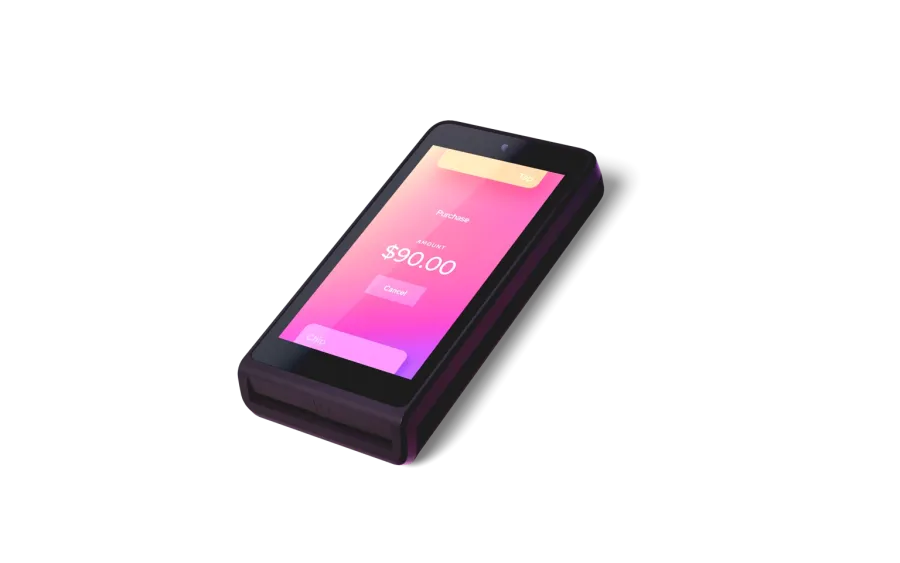 Helcim Card Reader
|
$199 (one-time purchase) | 4″ color touchscreen | Wi-Fi + built-in 4G (optional $7/month) | Tap, chip, and PIN | Yes – enter amount and process without pairing to a phone or app | Operates standalone or pairs with Helcim POS app, mobile apps, tablets, workstations, and Helcim Payment Extensions for existing software | Built-in rechargeable battery, all-day use | Fleets, mobile businesses, affordable countertop chip & PIN, and standalone on-the-go payments |
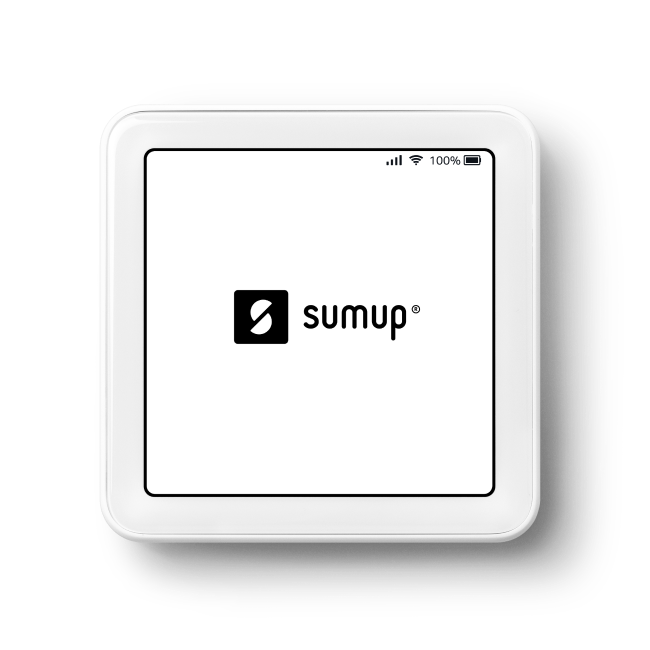 SumUp Solo
|
$99 (one-time purchase) | 3-inch black-and-white LED touchscreen | Wi-Fi + built-in 4G SIM (free, unlimited data), with offline mode as a backup. | Tap, chip, and PIN | Yes – enter amount, manage items, and process directly without pairing to a phone or app | Operates standalone or pairs with free SumUp Business App, and POS software | Built-in rechargeable battery, all-day use | Micro-merchants and mobile sellers wanting an ultra-compact standalone reader without recurring monthly hardware fees |
Helcim vs. SumUp
A transparent, side-by-side look at fees, tools, and hardware that Helcim and SumUp offer, so you can see what you'd actually pay. SumUp's processing rate stays exactly the same, while Helcim passes through the real interchange fee that banks and card networks charge, adds one transparent margin on top, and drops that margin automatically as your volume grows.
Helcim vs. SumUp business models
SumUp charges one processing rate for every card in the U.S., which means if your customers pay with a debit card in person, which costs only a few cents or 1%, you have to pay the same high credit card processing fee of 2.6% + 10¢. In contrast, Helcim is an interchange-plus processor that passes along exactly what banks and payment networks charge you (wholesale costs) so that you don’t overpay on processing fees.

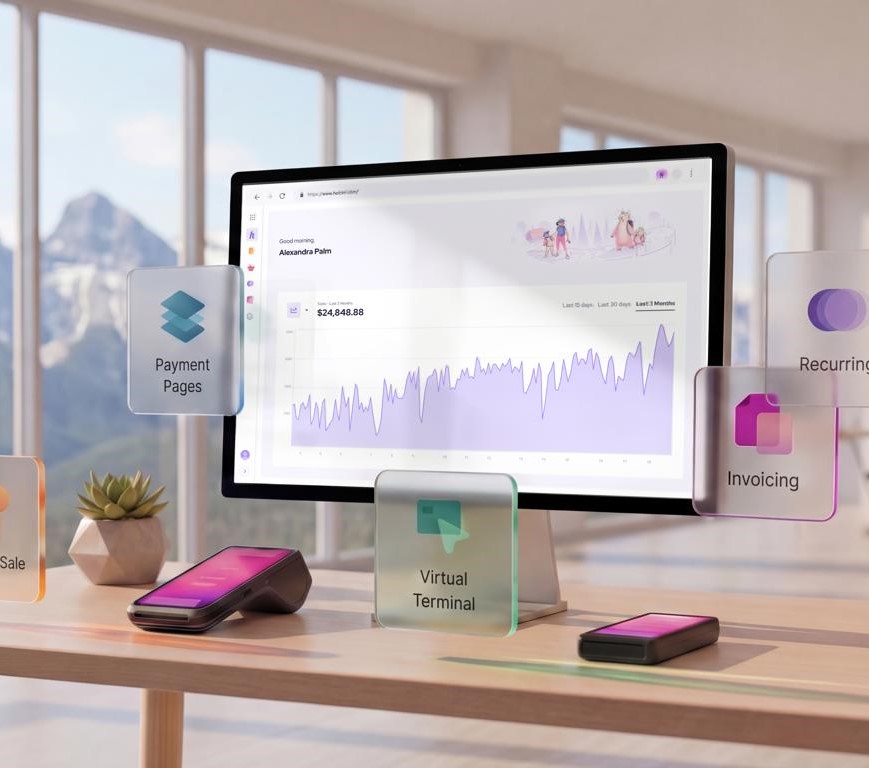
How Helcim's model works
- Helcim uses interchange-plus pricing: it passes through the true fees that banks and card networks charge. So, you pay lower fees when your customers use debit cards or low-cost credit cards.
- Helcim's processing fees drop automatically as your payment processing volume increases, no renegotiation, no plan upgrades, and no phone calls required.
- All POS software and online payment tools are included at no monthly cost: virtual terminals, invoicing, online checkout, recurring payments, customer management, and inventory tracking.
- Businesses can use the Helcim POS system on their laptop, PC, phone, or tablet with a connected Helcim Card Reader or Helcim Smart Terminal.

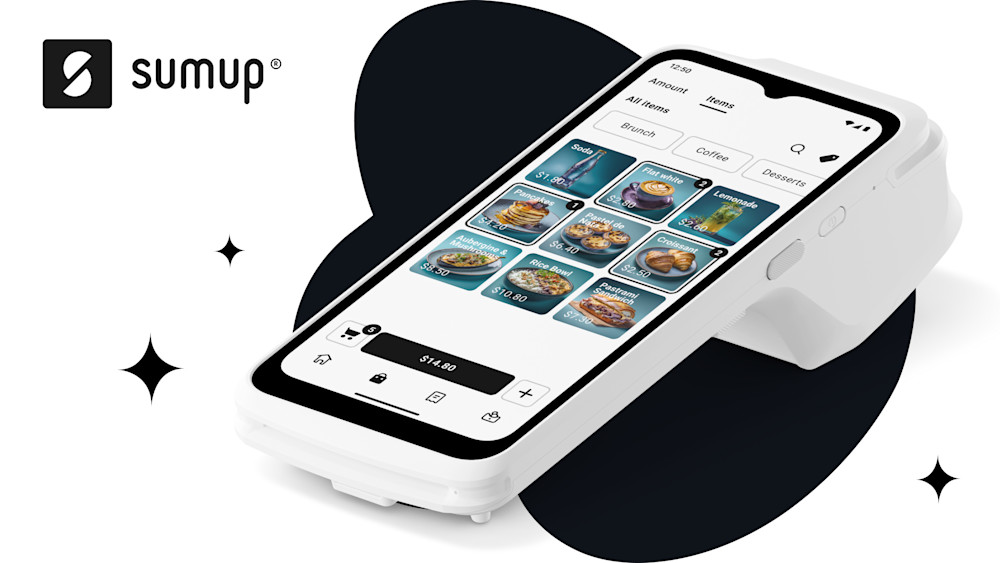
How SumUp's model works
- SumUp charges one flat rate in the U.S. for all card transactions: 2.6% + 10¢ in person and 3.5% + 15¢ online. Only Canada supports a separate debit card processing fee of 0.90%.
- SumUp offers very limited payment tools. Especially in Canada, SumUp only offers a card reader, a POS app, and payment links. There are no other payment features like recurring payments or payment pages.
- In the U.S., the SumUp POS system requires a SumUp POS station, which can cost $499 upfront or $199/month to $289/month. In Canada, instead of a dedicated POS system, SumUp only offers a standalone card reader with a basic built-in POS app and features.
- SumUp is not HIPAA compliant because it does not offer or sign a Business Associate Agreement (BAA).
Helcim vs. SumUp pricing and fees
Helcim includes every tool at $0/month with transparent interchange-plus pricing and automatic volume discounts that lower your rates as you grow. SumUp provides flat-rate payment processing fees which are expensive if your customers process low-cost credit cards or debit cards.
Pricing Model
Monthly Software Fees
In-Person Processing
Online Processing
Virtual Terminal
US Common PIN Debit
EFT-PAD Processing
Tap to Pay on Phone
Volume Discounts
POS Software
Invoicing
Recurring Payments
Contract Terms
Hidden / Overhead Fees
Chargeback Fee
Smart Terminal
Card Reader
Helcim
Interchange-plus
$0 — everything included
1.79% + 8¢
Average
2.31% + 25¢
Average
2.31% + 25¢
Average
1.00% + 8¢
Average
0.5% + 25¢ (capped at $6)
Extra 10¢
Up to 70% off Helcim margin
Included free
Included free
Extra 0.4% per transaction
No contract
$0 — no PCI, statement, or batch fees
$15 (refundable if merchants win the dispute)
$349
$199
SumUp
Flat-rate / Pay-as-you-go
$0 for core app & basic POS software.
2.60% + 10¢
3.50% + 15¢
3.50% + 15¢
2.60% + 10¢
Not natively available
2.60% + 10¢
Not offered
Included free (optional POS Pro / Connect loyalty suites $199+/mo)
Included free
Not natively supported
No contract
$0 — no PCI, statement, or batch fees
$0
$249
Unavailable
| Provider | Pricing Model | Monthly Software Fees | In-Person Processing | Online Processing | Virtual Terminal | US Common PIN Debit | EFT-PAD Processing | Tap to Pay on Phone | Volume Discounts | POS Software | Invoicing | Recurring Payments | Contract Terms | Hidden / Overhead Fees | Chargeback Fee | Smart Terminal | Card Reader |
|---|---|---|---|---|---|---|---|---|---|---|---|---|---|---|---|---|---|
|
|
Interchange-plus | $0 — everything included | 1.79% + 8¢ Average | 2.31% + 25¢ Average | 2.31% + 25¢ Average | 1.00% + 8¢ Average | 0.5% + 25¢ (capped at $6) | Extra 10¢ | Up to 70% off Helcim margin | Included free | Included free | Extra 0.4% per transaction | No contract | $0 — no PCI, statement, or batch fees | $15 (refundable if merchants win the dispute) | $349 | $199 |
|
|
Flat-rate / Pay-as-you-go | $0 for core app & basic POS software. | 2.60% + 10¢ | 3.50% + 15¢ | 3.50% + 15¢ | 2.60% + 10¢ | Not natively available | 2.60% + 10¢ | Not offered | Included free (optional POS Pro / Connect loyalty suites $199+/mo) | Included free | Not natively supported | No contract | $0 — no PCI, statement, or batch fees | $0 | $249 | Unavailable |
The bottom line
Choose SumUp if you are a micro-merchant, mobile operator, or pop-up shop processing under $5,000–$10,000/month. You'll benefit from lower upfront hardware costs, flat-rate predictability, and zero chargeback risks. Choose Helcim if you process over $10,000/month, prefer lower payment processing fees, prefer more payment tools or process ACH/EFT payments. Helcim's interchange-plus rates and automatic volume tiering will yield substantial monthly savings on processing fees.
Helcim uses an interchange-plus pricing model that passes the true transaction fees charged by banks and payment networks to merchants. These true fees vary every transaction. Average fees are based on common credit cards, excluding American Express, and an average transaction amount of $300. SumUp rates shown reflect SumUp's direct pricing and publicly available information. Actual rates, fees, and contract terms vary significantly depending on which bank, ISO, or reseller sold you SumUp — your actual costs may be higher.
Helcim vs. SumUp software feature comparison
Helcim includes a full suite of payment tools for free, such as POS systems, recurring payments, payment pages, invoicing, and customer management. SumUp provides basic POS and online tools like invoicing and virtual terminals. SumUp requires a subscription plan for customer management features, ranging from $199 to $349. Ultimately, Helcim delivers more payment tools out of the box, whereas SumUp requires tiered SaaS plans to unlock advanced business tools.
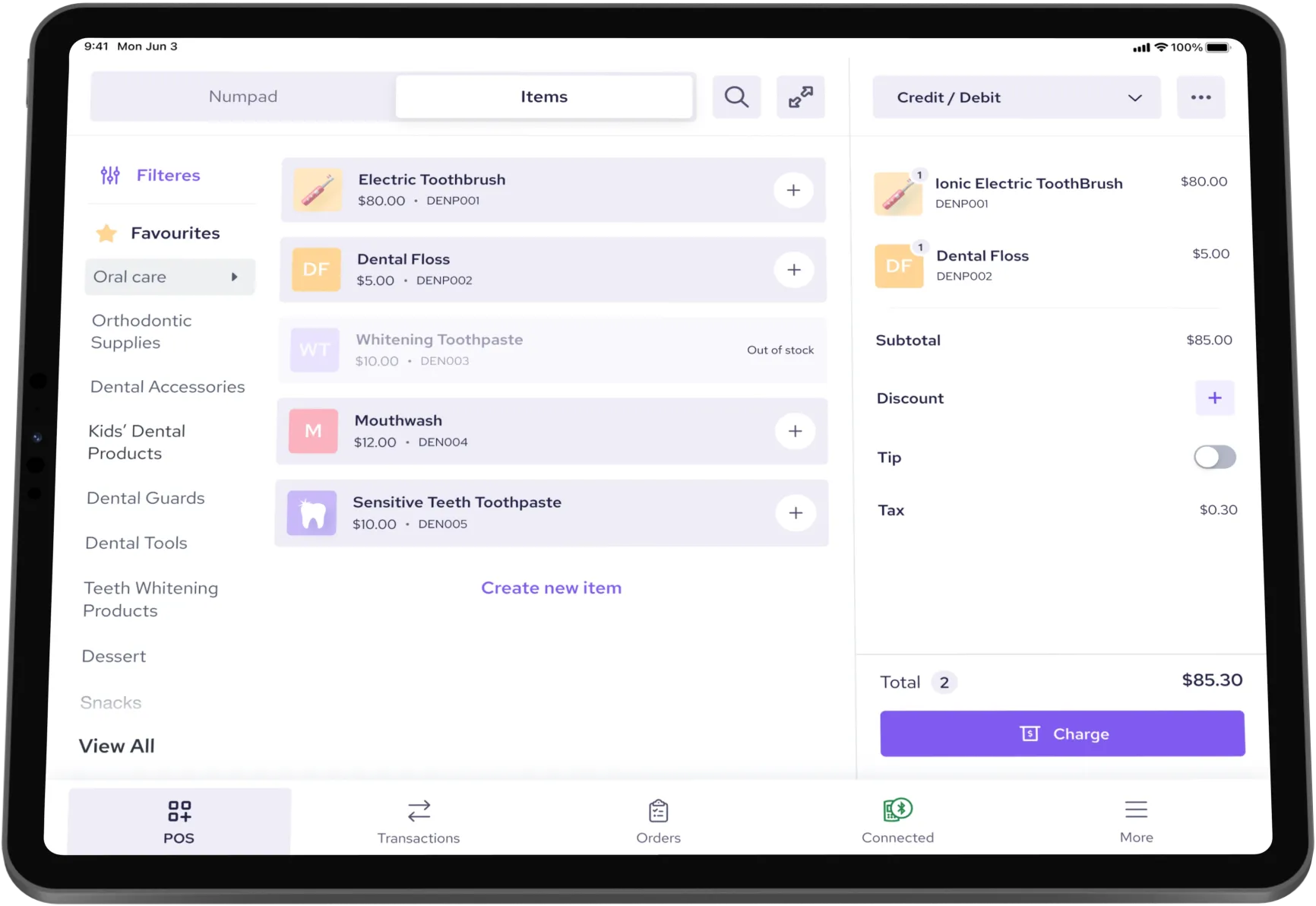
Helcim POS System
A cloud-based POS that turns your phone, tablet, Mac, or Windows computer into a functional register. You can connect the Helcim Card Reader or Helcim Smart Terminal to process payments in person. Both U.S. and Canada merchants can access the Helcim POS system.
- Syncs all transactions, inventory changes, reporting, and customer data across all sales channels, both online and in person.
- Process partial or full refunds, split bills for group checkouts, and trigger a connected cash drawer, all from the same device.
- Includes unlimited staff logins with role-based PINs, so you don't pay per-seat fees to give every employee access.
- All basic and advanced POS features, such as customer databases, customer portals, secure card vaults, SMS/email messaging, and automations—are included at $0 in monthly software fees.
SumUp POS System
The POS software comes pre-installed on paid hardware registers. Unlike Helcim, merchants cannot simply download a complete SumUp POS app onto a personal tablet or laptop to turn existing hardware into a full register. Additionally, complete SumUp POS solutions are currently only available in the U.S..
- SumUp charges $499 for the POS Lite hardware bundle or from $799 for SumUp POS Pro hardware, with software subscriptions starting at $99/month for the full POS Pro tier.
- The SumUp Terminal has a camera with AI image recognition to scan physical items or menus and automatically build out your product catalog.
- Basic CRM capabilities (like customer databases) and advanced tools (such as customer loyalty programs and automated marketing) require upgrading to paid monthly plans like Connect Plus ($199/month) or Connect Pro ($289/month).
What both offer
Both Helcim and SumUp provide reliable point-of-sale solutions capable of processing major credit and debit cards via EMV chip and NFC contactless tap. Only the Helcim POS system is HIPAA compliant. Furthermore, both companies don't require contracts and charge $0 in PCI compliance fees, statement charges, or early termination penalties.
The bottom line
Helcim is the ideal choice for growing businesses seeking feature-rich, $0/month POS software that runs on existing hardware. Helcim's interchange-plus pricing and automatic volume discount is ideal for businesses that are looking for low fees. Conversely, SumUp is great for micro-merchants or merchants who prefer complete POS register bundles. SumUp offers self-service kiosks which are ideal for busy businesses that want to reduce lines.
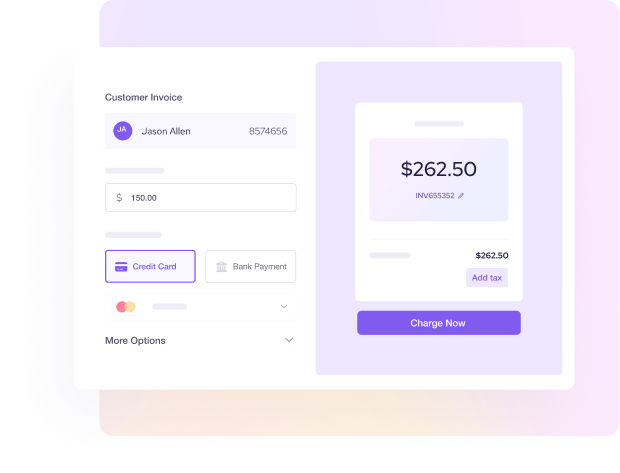
Helcim Virtual Terminal
A web-based terminal designed for phone and mail orders with no additional monthly fees. You can process payments on your phone, laptop, desktop or tablet.
- Process card-on-file payments instantly, hold funds via pre-authorizations, accept partial payments, and collect outstanding or past-due invoices faster.
- Accept ACH and EFT bank payments for high-value invoices to save more than 50% on payment processing fees compared to standard cards.
- The Helcim Customer Vault uses AES-256 encryption to securely store all payment details and personal information.
SumUp Virtual Terminal
Lets you key in a card number, expiration, and CVV from the SumUp app or dashboard to charge a phone or mail order.
- SumUp requires a secondary underwriting review and an explicit request to support before Virtual Terminal is enabled, because manually keyed transactions carry a higher fraud risk.
- There's no documented pre-authorization/hold mode, SumUp's Virtual Terminal charges immediately.
- SumUp doesn't accept bank-debit or ACH options for remote payments.
What both offer
Both let you charge a card without a physical reader in front of you. It's useful for phone orders, mail orders, or any time the customer isn't standing at your counter. You key in the card details from a browser or app and the transaction posts to the same account as your in-person and online sales.
The bottom line
Helcim wins for any business that needs to key in a card the day they sign up, hold funds before capturing them, or accept bank payments remotely. SumUp's Virtual Terminal covers the basics but asks you to clear an approval step first.
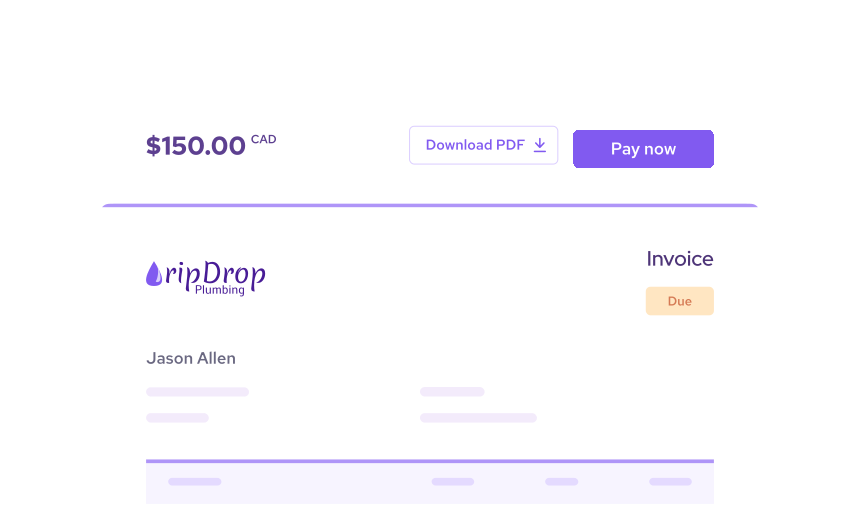
Helcim Invoicing
Create, send (via SMS or email), and track unlimited professional invoices from your account at no extra cost. You only pay transaction processing fees.
- Customers can pay by credit card, debit, or ACH/EFT through a secure, one-click "Pay Now" button embedded directly in the emailed invoice.
- Set up automated reminders, recurring invoices, and partial payments (such as deposits and installments) without needing paid add-ons.
- Invoicing is HIPAA-compliant and offers eight document types (estimate, quote, order, purchase order, invoice, statement, registration, credit) for different stages of a sale.
SumUp Invoices
Create and send unlimited invoices from the SumUp app or dashboard at no fixed cost.
- Push notifications tell you the moment an invoice is opened, paid, or goes overdue, without you checking the dashboard.
- Standard accounting terms (Net 30, EOM, COD) can be added directly to the invoice.
- There's no recurring-invoice option, so subscription or membership billing has to be re-invoiced manually each cycle.
What both offer
Both let you build a professional invoice with your logo and business details, send it by email, and let the customer pay with a card through an embedded payment link. You can track the invoice status from your dashboard. You only pay a processing fee when a customer actually pays online.
The bottom line
Helcim wins on invoice sophistication: You can do recurring invoices, have more document types, ensure HIPAA compliance, at a lower online-payment rate. SumUp's invoicing is simpler but works fine for one-off billing.
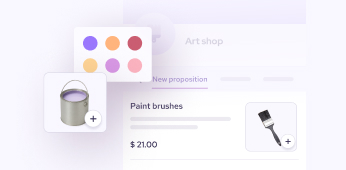
Helcim Payment Pages/Payment Links
You can create a Payment Page and share it to your customers as a link to collect payments for reusable, fixed, or editable amounts, no website required. Merchants can easily accept credit cards and ACH bank transfers.
- You can send these payment pages to customers as a direct link, share them via a QR code, or embed them directly onto a webpage.
- You can match payment pages to your brand colors and send links to enroll customers into recurring payment or subscription plans.
- You can share payment links directly via URL, embed them onto a webpage, or generate unique QR codes for physical signage, counter displays, and in-person contactless payments.
- You can add a "Pay Now" button, embed HelcimPay.js into an existing website, or share standalone payment links that require no web hosting at all.
SumUp Payment Links
Generate secure, single-use payment URLs directly through the mobile app or web dashboard.
- Similar to Helcim, merchants can send links to customers via SMS text, email, WhatsApp, or display them on-screen as scannable QR codes.
- Merchants can not customize brand colors of the payment page or embed payment pages onto an existing website.
- SumUp payment links cost 3% (Canada) and 2.6% + 10 cents (US), while Helcim only costs 2.31% + 25¢ (in Canada) or 2.38% + 25¢ (in the U.S.).
What both offer
Both Helcim and SumUp enable merchants to accept remote card payments without paying monthly subscription fees or maintaining a full ecommerce website. Each platform allows businesses to generate secure payment links and distribute them via SMS, email, messaging apps, or scannable QR codes. Additionally, both tools direct customers to a mobile-friendly checkout portal where they can complete transactions safely online.
The bottom line
Helcim Payment Links deliver more flexibility for growing businesses by offering embeddable website buttons, ACH bank transfers, payment page customization, and lower transaction fees. SumUp Payment Links provide a simpler option for micro-merchants who only need to collect occasional, one-off payments over text or messaging apps. Ultimately, if you need web integration, bank payments, or volume-based pricing discounts, Helcim is the far more practical choice.
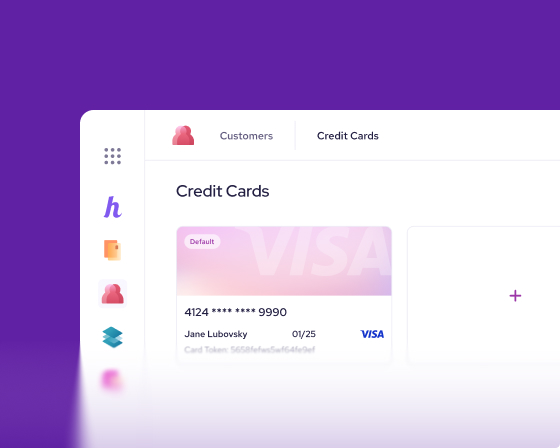
Helcim Customer Manager
Helcim Customer Manager is included on every account at $0/month.
- You can store up to 10 tokenized cards per customer with AES-256 encryption, and the merchant never has to re-enter card data for repeat charges.
- You can manage customer contact information, saved payment methods, and linked invoices within a single dashboard.
- You can analyze purchase histories, product preferences, and buying behavior across sales channels without paying for an upgraded software plan.
SumUp Connect
A customer database and card-on-file system that ships as part of the paid SumUp Connect subscription plan.
- You need a Connect Plus or Connect Pro plan ($269–$349/month standalone, or bundled into a $199–$289/month POS plan) to get SumUp Connect.
- You can create loyalty programs and automated marketing campaigns.
- You can schedule customer outreach, birthday discounts, lapsed-customer win-back messaging, and review requests.
What both offer
Both keep a record of who your customers are and let you save a card on file so repeat transactions don't require re-entering payment details.
The bottom line
Choose Helcim Customer Manager if you want comprehensive customer records, invoice management, and secure saved cards included out of the box at $0/month. Choose SumUp Connect if you want marketing and digital loyalty program features, and are willing to pay a recurring monthly subscription.
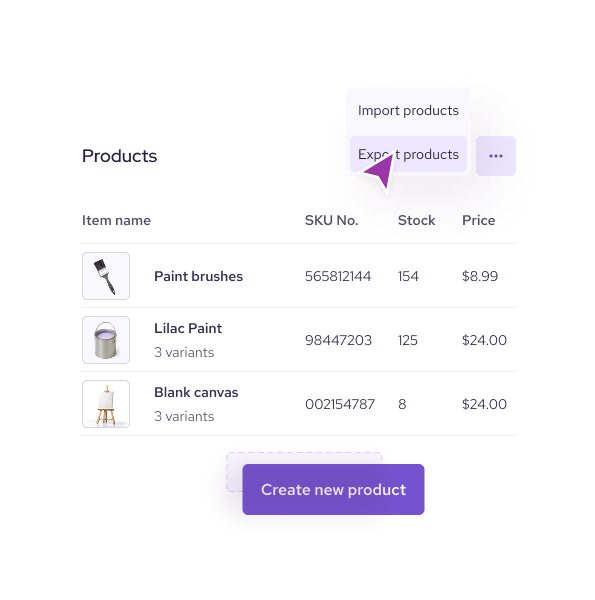
Helcim Inventory Management
A free, built-in inventory management tool that seamlessly syncs your data across your POS, invoicing, and online store.
- Set tailored pricing models, including wholesale rates for specific customer segments, tiered volume discounts, and buy-one-get-one (BOGO) promotions.
- Create products and services with variations and add-ons, perform bulk CSV imports, and set automated low-stock alerts.
- Operates on a single master catalog, ensuring a sale made through any sales channel instantly updates inventory levels everywhere.
SumUp Inventory Management
SumUp offers some unique features that Helcim doesn't have.
- Take a physical photo of a printed menu or price list using the SumUp Terminal or mobile app, and AI image recognition automatically extracts text, items, and prices to build out your catalog.
- SumUp allows inventory to track into negative numbers if you continue selling past zero. This feature allows you to keep processing sales during stock shortages.
- Set automated low-stock notifications so you never run out of inventory unexpectedly.
What both offer
Both platforms provide built-in inventory management tools at $0 in additional software fees, allowing merchants to build product catalogs, organize items into categories, and receive automated low-stock alerts. Additionally, both systems automatically update stock levels across sales channels when transactions occur.
The bottom line
Choose Helcim Inventory Management if you run a retail, wholesale, or multi-channel business that requires complex pricing structures (such as BOGO, wholesale rates, and tiered discounts), bulk CSV catalog uploads, and unified inventory syncing across POS, online store, and invoicing. Choose SumUp Inventory Management if you want fast, AI-assisted menu creation and the ability to keep processing sales even when inventory dips below zero.
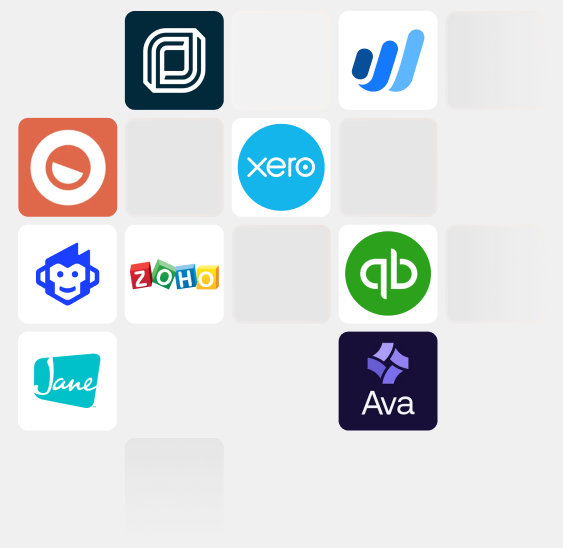
Helcim Integrations
Helcim's integrations are built to help merchants use Helcim with the software they already run. The Payment Extension is a unique no-code Chrome extension that connects Helcim to 30+ billing tools with closed payment systems, like Jane, Wave, and Zoho, so you keep your software but pay Helcim's lower rates.
- Payment Extension: use Helcim inside software that locks you into its own processor
- Native integrations with QuickBooks, Xero, and WooCommerce
- Helcim API and HelcimPay.js for custom development
SumUp Integrations
SumUp offers some unique integrations that Helcim doesn't have.
- SumUp integrates with UrbanPiper which transfers online orders placed on DoorDash, Uber Eats, Grubhub, Postmates, ChowNow, and Foodhub directly into the SumUp POS queue and Kitchen Display System (KDS).
- SumUp can integrate with both WooCommerce and Shopify for merchants to embed checkout pages on their online store, while Helcim integrates only with WooCommerce.
What both offer
Both Helcim and SumUp offer native integrations with Intuit QuickBooks to sync daily sales, tax calculations, tip allocations, and payout reconciliations automatically.
The bottom line
Choose Helcim if you want to connect Helcim to different business management and billing software like Zoho, Jane, or Wave. This connection helps you save on payment processing fees while still using your software. Choose SumUp if you need integrations with food delivery platforms like Uber Eats and DoorDash.
Payment tools only one side has
Beyond the shared essentials, each platform has exclusive tools the other doesn't offer. These differences can be deciding factors depending on how your business operates.

Helcim Online Checkout
A free, no-code online store that comes with every account, hosted at yourname.helcim.app with a setup wizard, product catalog sync, discount codes, and Google Pay at checkout, no website or developer required.
Helcim Recurring Payments
Helcim offers a robust, built-in recurring payment tool featuring flexible schedules, automatic retries on failed payments, free trials, customizable add-ons, and detailed subscriber management. Merchants can set daily, weekly, monthly, or yearly cycles, add free trials, one-time setup fees, and add-ons, and let customers sign up through a payment link.
Helcim Payment Extension
Helcim Payment Extension lets a merchant connect Helcim to software they already use to process payments at Helcim's transparent rate without leaving that software.
SumUp Connect
Merchants can send targeted SMS and email campaigns, including birthday offers, first-visit welcomes, and win-back promotions for the customers.
SumUp Loyalty & Rewards
Merchants can create a loyalty program to reward their customers.
Helcim vs. SumUp hardware comparison
In the U.S., both Helcim and SumUp offer standalone payment terminals with built-in receipt printers and compact card readers. In Canada, only Helcim offers a payment terminal. Here's how each device compares on specs, connectivity, and what's included.
Head-to-head
Both Helcim and SumUp offer inexpensive card readers for Tap, Chip and PIN entry. Helcim's card reader has a slightly larger screen and Fee Saver surcharging built in, so it's slightly more expensive. SumUp's Solo includes free unlimited 4G with no add-on plan, where Helcim charges $7–$9/month for the equivalent LTE connectivity. The real difference is the in-person processing rate behind them: Helcim's starts lower and falls with volume, while SumUp's stays fixed no matter how much you process.
| Device | Price | Display | Connectivity | Accepts | POS Software | Receipt Printer | Battery | APIs | Best For |
|---|---|---|---|---|---|---|---|---|---|
 Helcim Smart Terminal
|
$349 (one-time purchase) | 7″ HD touchscreen | Wi-Fi + built-in 4G (optional $7/month) | Tap, chip, swipe, manual entry | Full POS app pre-loaded — inventory, tipping, receipts, employee logins | Built-in thermal printer | Up to 12 hours; USB-C charging | Full Smart Terminal APIs for custom integrations | Businesses wanting a turnkey countertop POS or accepting payments on the go |
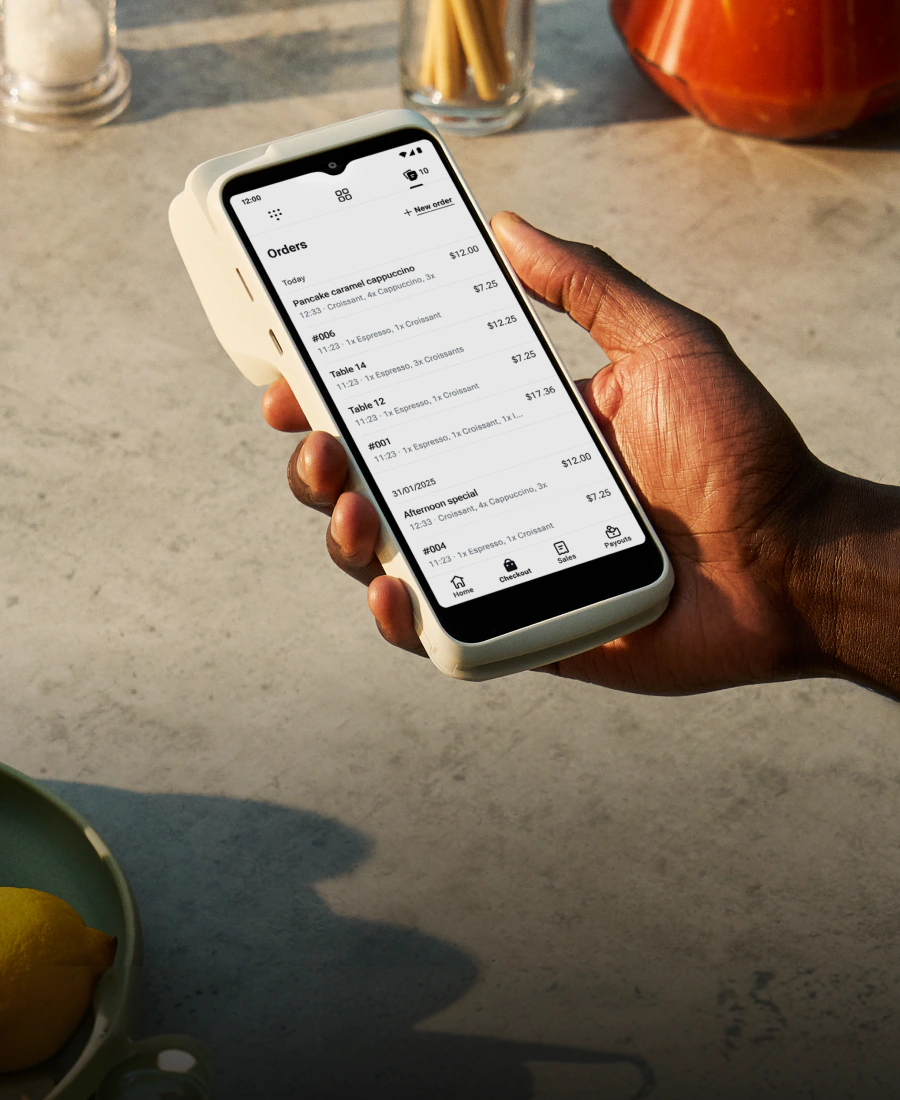 SumUp Terminal
|
$249 (one-time purchase) | Large HD touchscreen (Corning Gorilla Glass 5) | Dual Wi-Fi + built-in 4G SIM (free, unlimited data) | Tap, chip, swipe, manual entry | All-in-one POS app pre-loaded — item catalog, AI menu scanning, tipping, receipts, staff profiles | Built-in thermal printer (58mm) | Up to 14 hours | SumUp REST APIs & eCom API for custom integrations | Mobile or countertop businesses wanting an all-in-one terminal with a built-in printer and zero cellular fees |
Head-to-head
Both hardware offers a built-in POS app, a built-in receipt printer, and dual Wi-Fi/cellular connectivity. SumUp's Terminal is the cheaper device up front and includes free unlimited 4G plus an AI feature that builds your item catalog from a photo of your menu. Helcim's Smart Terminal costs more up front but its processing rate is lower to start and keeps dropping as you grow, while SumUp stays fixed.
Where each platform shines
Both Helcim and SumUp are strong payment platforms — but they're built for different types of businesses. Here's an honest look at where each one excels.
You want low, transparent pricing
Helcim's interchange-plus model passes the exact wholesale cost charged by the card networks directly to you, plus a transparent markup on top.
You are growing or scaling up
Your processing rate drops automatically as your sales volume rises (saving you up to 70% off Helcim's markup). SumUp's flat rate stays the same regardless of how much volume you process.
You don't want monthly fees stacking up
All payment tools and features are included for free. Your monthly bill won't grow just because your team or business footprint expands. In contrast, SumUp charges monthly subscription fees for advanced tools like Connect Plus ($199/month) or Connect Pro ($289/month).
You want more than just a POS system and invoicing
Helcim offers a POS, invoicing, an online store builder, recurring billing, a virtual terminal, CRM, and inventory management right out of the box—no monthly software plans required.
You process a high volume of debit transactions
Helcim charges a low flat fee for Canadian Interac debit and offers competitive U.S. debit rates. SumUp only offers a lower debit card rate in Canada, while U.S. businesses must pay standard credit card rates on debit transactions.
You want to stay within your existing software
Helcim offers the Helcim Payment Extension, allowing you to process payments at lower rates directly inside your existing business management, accounting, and billing software.
You want the lowest possible upfront entry cost
In the U.S., SumUp offers the SumUp Solo for just $99, allowing new sellers to start taking card payments with a lower upfront hardware investment.
You need free 4G on payment hardware
SumUp's standalone devices include a built-in SIM card with free, unlimited cellular data, whereas Helcim requires an optional $7 USD / $9 CAD monthly mobile data plan for LTE.
You need integrations with food delivery platforms
SumUp integrates directly with platforms like DoorDash, Uber Eats, Grubhub, Postmates, ChowNow, and Foodhub (via UrbanPiper), whereas Helcim does not natively support these delivery integrations.
You need a self-service ordering kiosk
For quick-service restaurants, SumUp offers a dedicated self-service Kiosk product that Helcim does not currently match.
You want an automated marketing tool
By subscribing to Connect Plus ($199/month) or Connect Pro ($289/month), your business can build digital loyalty programs and launch automated marketing campaigns.
You operate globally
SumUp operates in dozens of countries worldwide, whereas Helcim exclusively serves businesses in the U.S. and Canada.
When to choose Helcim or SumUp
Helcim is built for growing businesses that want transparent pricing and every payment tool included at $0/month. SumUp is built for brand-new or micro businesses that want the simplest possible start with low hardware costs.
Choose Helcim if you want your processing rate to keep falling automatically as your business grows, you'd rather have invoicing, an online store, recurring billing, a customer directory, and all other payment tools included from day one instead of subscribing to a subscription plan.
Choose SumUp if you're a very small, mobile, or just-starting operation that wants to buy one inexpensive reader today. You don't expect your volume to grow much in the near term, and you're comfortable paying a separate monthly subscription later if you eventually want loyalty marketing or multi-location staff tools.
Frequently asked questions
Helcim uses interchange-plus pricing that falls automatically as your volume grows, plus a dedicated merchant account and a full suite of built-in tools (POS, invoicing, online store, recurring billing, customer management) with no extra monthly fee. SumUp uses one flat processing rate that never changes, sells hardware and its basic POS software separately from its deeper loyalty and marketing tools, and operates merchants as sub-accounts under its own Payment Facilitator agreement.
For high-volume businesses processing over $10,000 per month, Helcim offers substantially lower overall processing costs than SumUp due to its transparent interchange-plus pricing model. Helcim automatically reduces its markup as your sales volume grows, giving scaling merchants progressive discounts that maximize profitability. In contrast, SumUp uses a fixed flat-rate fee structure that remains static regardless of how much volume your business processes. As a result, high-volume merchants will pay significantly more per transaction with SumUp, making Helcim the far more cost-effective long-term choice.
No, both don't require long-term contracts. Helcim charges no cancellation fee. SumUp's own marketing likewise states no binding contracts and no early termination penalty.
Helcim charges no monthly, PCI, statement, setup, or cancellation fee. SumUp's published pricing also shows no monthly minimum or hidden fee on its base card-reader tier, but its deeper software tools (Connect loyalty, POS Pro) are separate monthly subscriptions at $199–$349/month, and its Virtual Terminal requires a manual approval step before you can use it.
Yes, especially for a business that expects to grow. Helcim's volume discounts, interchange-plus pricing and built-in payment tools tend to save more the larger you get. SumUp can remain the better fit for a very small or occasional-selling business that just wants the cheapest possible reader and no plans to scale processing volume soon.
Helcim's support model is built around "speak to a human" through a dedicated merchant account. SumUp offers U.S.-based phone and email support, with POS and loyalty support available 9am–9pm ET seven days a week and card reader support 9am–7pm ET Monday through Friday.
SumUp operates in dozens of countries worldwide, so it covers far more ground if you're expanding internationally. Helcim processes payments in the U.S. and Canada only.
Choose SumUp if you're a very small, mobile, or brand-new business that wants the lowest-cost reader today and doesn't expect meaningful growth in processing volume soon. Choose Helcim if you want a rate that falls automatically as you scale, a full set of business tools included at no extra monthly cost, and a dedicated merchant account backed by human support.