























TLDR: How to create HIPAA compliant invoices
- Exclude specific clinical details (diagnoses, therapy notes) and only share minimal necessary detail to stay HIPAA compliant.
- Make sure to get a Business Associate Agreement (BAA) signed by your payment processor.
- Ensure your payment processor has bank-grade encryption (AES-256 and TLS 1.2+).
- Send invoices via a secure portal link, never plain email attachments
- You shouldn’t have to pay extra to be HIPAA compliant. Payment processors like Helcim offer free BAAs, full encryption, and transparent pricing without hidden fees.
Imagine you run a small mental health practice. You finish a great session, open a simple invoicing program and type out a quick invoice with their personal information and a "$360 - 60-minute PTSD therapy session." You hit send and move on with your day.
A month later, a basic data scrape catches that email. Suddenly, you are facing a $2,000 HIPAA fine for sending patient data over an insecure network. In 2025 alone, 8.5 million dollars were collected in enforcement actions in the US.
This happens to clinics every year and most owners think sending an invoice is just about collecting their fees. Under US federal law, combining a patient's name with a specific medical service turns that document into Protected Health Information (PHI). Without secure HIPAA compliant tools, every invoice is an expensive gamble and an unnecessary risk to your patients.
What is a HIPAA-compliant invoice?
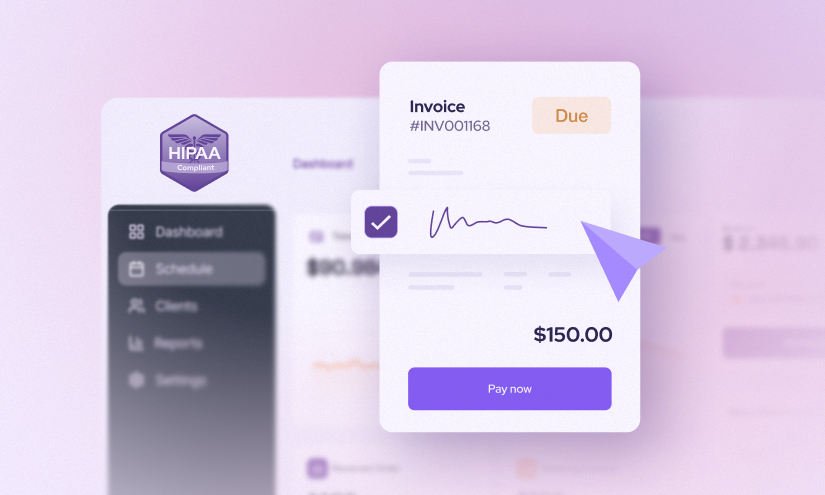
A HIPAA-compliant invoice is a medical bill that uses strong payment encryption, safe delivery tools, and broad service descriptions to protect patient records. It ensures that only the patient and authorized clinic staff can view the financial details.
What is HIPAA? Health Insurance Portability and Accountability Act:* A United States federal law passed in 1996 that protects sensitive patient health information from being shared without consent or knowledge.
Regular businesses can list every item on a receipt but the healthcare industry is different. Combining patient names with clinical descriptions breaks federal law. For example, adding specific diagnosis codes or session notes creates immediate legal risk. Safe medical invoices don’t include the extra clinical context and HIPAA compliant billing systems also encrypt the documents so nobody can access it if they intercept the message.
What PHI can be included on a medical or healthcare invoice?
Only minimal Protected Health Information (PHI) like the patient's name and address can be included on an invoice, and only when paired with generic billing terms. You must strictly exclude any details that link the patient's identity to a specific diagnosis or clinical treatment.
HIPAA requires providers to share the minimum necessary data to get paid. Including a patient's name is fine, but pairing that name with clinical details creates a privacy violation. Keep the health details out of the bill to keep your practice safe.
- Safe data: Name, date of service, general terms like "Professional Services," and total cost
- Risky data: Details that reveal medical conditions, diagnosis codes, and prescription names.
How to have HIPAA-compliant invoicing
To ensure the invoices are HIPAA compliant, healthcare clinics need to do the following tasks:
- Get a signed Business Associate Agreement from your payment provider
- Keep invoice details broad and minimal
- Ensure data encryption
- Send bills through a secure link
1. Get a signed Business Associate Agreement from your payment provider
A Business Associate Agreement (BAA) is a legal contract that binds your payments vendor to federal privacy rules. Before sending an invoice, make sure your payment provider offers one. Helcim signs BAAs with healthcare merchants at no extra cost, formalizing a shared commitment to protect patient privacy from day one.
2. Keep invoice details broad and minimal
Even with a HIPAA-compliant processor, you must keep line items general to obey HIPAA's "Minimum Necessary" rule. This federal standard requires clinics to share only the bare minimum data needed to process a payment.
Listing specific conditions or therapy notes on a bill goes beyond what is required to collect money. Using broad terms like "Care Session" or "Professional Services" protects patient privacy if a receipt is printed out or viewed in a shared environment.
3. Ensure data encryption
Cyberattacks cause over 80% of healthcare data leaks and because unencrypted emails are easy targets for hackers, sending plain bills over standard networks puts your patient’s data at risk.
That said, you do not need to figure out how to scramble data on your own. Pick a payment processor that will do the heavy lifting for you. Helcim protects patient data using bank-grade AES-256 encryption while it rests on servers and TLS 1.2+ while it moves across the web.
4. Send bills through a secure link
Never send invoices as attachments through basic email or text messages. Instead, send an email notification through your HIPAA-compliant payment portal. This lets patients view and pay their bill safely without exposing their private records.

Which invoicing features should healthcare practices look for?
Healthcare practices should look for these following payment processing features:
- Signed Business Associate Agreements
- End-to-end data encryption
- No compliance fees
1. Look for processors that offer signed BAAs out of the box
Healthcare focused payment processors like Helcim sign BAAs directly with practice owners at no extra cost. This legal contract formalizes a shared commitment to keep patient data locked down from your very first transaction.
2. Choose a provider with end-to-end data encryption
Your invoices need protection in two stages: while it sits and while it travels across the web. If a hacker intercepts an unencrypted file during transfer, they can read every line item in plain text. Modern payment platforms use bank-grade AES-256 encryption to scramble files stored on servers, and TLS 1.2+ protocols to protect messages moving across the internet. Helcim uses these exact standards, keeping patient names and dollar amounts completely unreadable to outside eyes.
3. Verify that compliance features do not carry hidden fees
Some processors will sign a BAA, but they hide it behind expensive "enterprise" plans or charge heavy monthly fees. Finding a provider with transparent payment pricing and free BAAs keeps your practice legal without draining your revenue.
Protect your practice without overpaying for HIPAA compliance
You do not have to compromise your clinic's health just to accept payments. Yet, most practice owners get stuck choosing between heavy fees and heavy legal liability.
If you use non-HIPAA compliant payment apps or processors, you risk fines and exposing your patient’s data. On the other hand, if you pick a specialized medical processor, those providers often bundle their compliance features into higher pricing tiers or add extra monthly maintenance charges.
Helcim changes that math completely. You get a fully HIPAA-ready platform, an official BAA, and transparent Interchange-Plus pricing with zero monthly software fees, giving you complete peace of mind without hidden costs. You can explore how Helcim safeguards patient records and payment data on the Security Page.
Keeping your patient records safe does not have to cost a fortune. Sign up for Helcim for free today and request your BAA to keep your practice compliant from your very first bill.
FAQs
Does HIPAA compliance apply to invoices and receipts?
Yes, HIPAA rules apply to any invoice or receipt that links a patient's name to medical care or payment details. Pairing a client's identity with a service description creates Protected Health Information (PHI).
Is it a HIPAA violation to email an invoice?
Yes, emailing a standard, unencrypted invoice containing patient details violates HIPAA privacy rules. Sending Protected Health Information (PHI) over plain email exposes sensitive records to open networks where hackers can intercept them. To be compliant, you either have to use an encrypted email service with a signed Business Associate Agreement (BAA) or send a link that directs patients to a password-protected portal.
Is a payment receipt considered PHI?
Yes, a payment receipt is considered Protected Health Information (PHI) whenever it links a patient's name or contact info to a specific healthcare service. Billing statements and receipts fall directly under HIPAA rules because they reveal that a person received medical care.
Is payment processing exempt from HIPAA rules?
Payment processing is only exempt from HIPAA rules if the transaction handles basic banking data without connecting any patient and healthcare information. If a processor simply runs a credit card charge without receiving the patient names, treatment descriptions, or diagnosis codes, they act like a standard utility company.
However, the moment your billing software attaches a patient's name or a service description to that charge, the exemption vanishes. Because modern invoicing systems store and track these details, your payment processor must sign a BAA and follow strict HIPAA safeguards.