
























Think about the last time you checked your deposits after a full week of sessions. You've done the quick mental math — how many sessions, times what you charge — so you know roughly what should be sitting in your account. But the number that actually lands is always a little smaller than the one in your head. Not by a lot. Just enough that you notice it, shrug, and move on.
That gap is payment processing fees. And for most therapists, it's a gap they've never actually measured — because who has time to reconcile processor statements between client sessions?
Here's why that's worth five minutes of your time: that small, easy-to-ignore gap compounds fast across a full caseload, and depending on who's processing your payments, you could be handing over thousands of dollars a year for something a cheaper processor would do just as well — and just as compliantly.
This guide breaks down what therapists typically pay, why those fees run higher than they should, and which processors actually give you a fair deal.
What Are the Cheapest Payment Processors for Therapists?
The cheapest payment processors for therapists combine low transaction rates, HIPAA compliance, and no hidden monthly fees. Here's how the main options stack up:
| Processor | In-person card rate | Online card rate | ACH rate | Monthly fee | HIPAA/BAA | Best for |
|---|---|---|---|---|---|---|
| Helcim | Interchange-plus (avg. below 2%) | Interchange-plus (avg. below 2.5%) | 0.5% + $0.25 (capped at $6) | $0 | ✓ BAA available | Growing practices wanting the lowest rates |
| Square | 2.6% + $0.15 | 3.3% + $0.30 | 1% (min. $1) | $0 | ✓ BAA available | In-person practices, early-stage |
| Stripe (standalone) | 2.7% + $0.05 | 2.9% + $0.30 | 0.8% (capped at $5) | $0 | ✗ No BAA | Tech-savvy practices with developer support |
| Ivy Pay | 2.75% flat | 2.75% flat | Not available | $0 | ✓ Built for therapists | Solo practitioners just starting out and wanting simplicity |
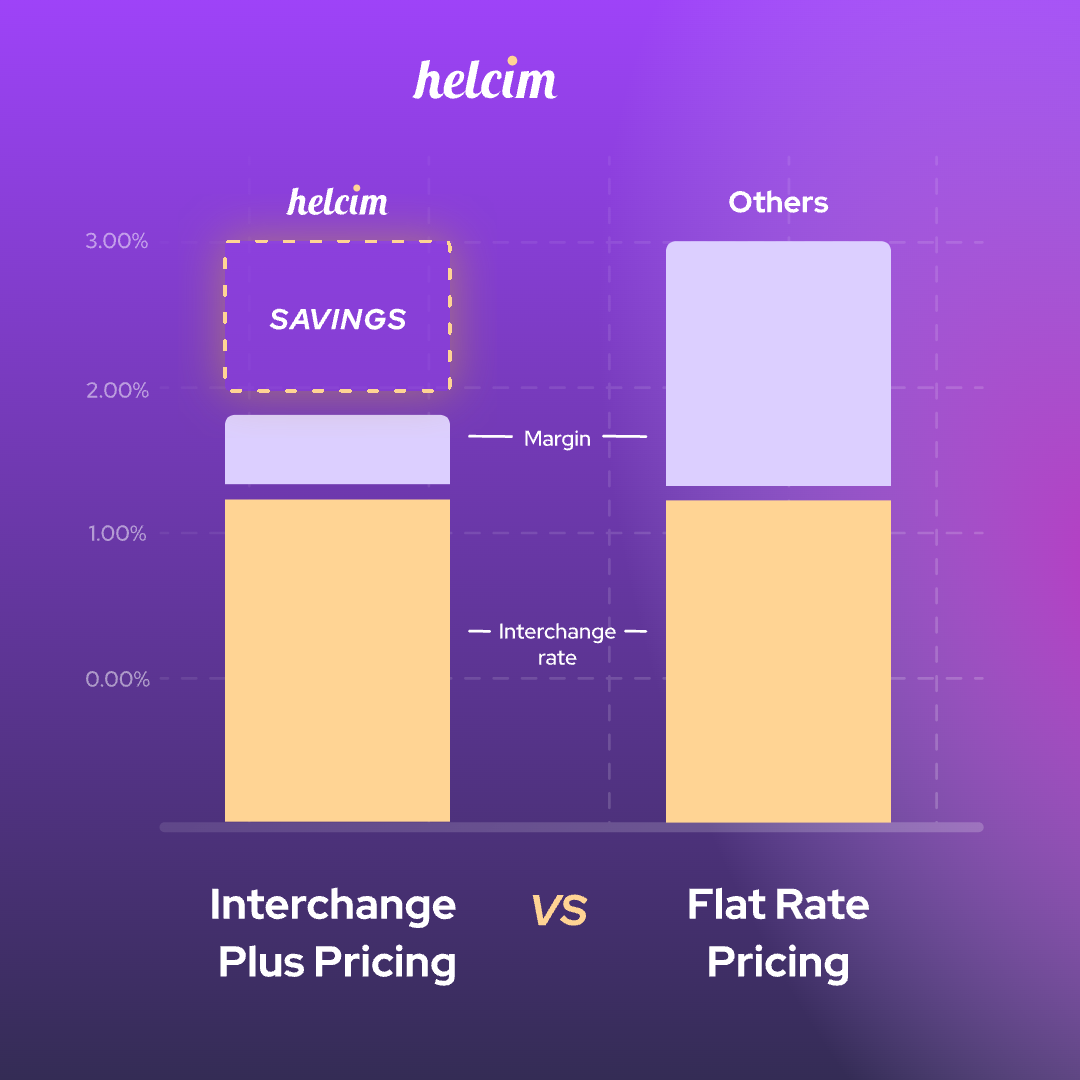
Two quick definitions before the callouts below: "interchange-plus" pricing means you pay the actual wholesale card-network rate plus a small, transparent margin, rather than one blended flat rate — it's why Helcim's rate can move and the others can't. A "BAA" (Business Associate Agreement) is the legal contract a processor has to sign before it's allowed to handle anything touching client health information under HIPAA.
A few things worth flagging from that table:
Stripe doesn't sign BAAs. This matters more than it might seem. Using Stripe without a HIPAA-compliant invoicing layer on top of it creates real compliance exposure — fines for HIPAA violations start at $100 per incident and can reach $50,000 for willful negligence. Unless you're using Stripe purely for card transactions inside a HIPAA-compliant EHR, it's a risk worth taking seriously.
Ivy Pay is convenient, but it has a ceiling. It was built specifically for therapists, and that shows — no card reader needed, HIPAA-compliant by design, clients store a card on file. But at 2.75% flat with no ACH transfers option, it stops being the cheapest choice once your volume grows — which, let's face it, is what you want.
Helcim is the strongest combination of low cost and compliance. It's HIPAA-compliant, signs BAAs on request, supports ACH, charges no monthly fee, and uses interchange-plus pricing — meaning your effective rate is already lower than any flat-rate competitor, and it keeps getting lower as your volume grows.
One quick clarification before we go any further: the companies we're talking about here are payment processors i.e the technology that actually moves money NOT your EHR or practice management platforms.
So if you're using SimplePractice, TherapyNotes, or Jane, you're not choosing between your EHR and a payment processor. Those platforms still rely on an underlying payment processor (typically Stripe) to process payments, then add their own markup on top creating a "fee sandwich," which we'll get into below.
The good news is you don't have to replace your EHR to lower your processing costs. With the Helcim Payment Extension, you can keep using your existing EHR for scheduling, client records, and notes, while simply swapping out the payment processor underneath it for Helcim's lower payment processing rates. It’s honestly a win-win for your practice!
We'll walk through exactly how that works later in this guide — but first, let's look at why these fees run so high to begin with.
What Are Typical Payment Processing Fees for Therapists?
Most therapists pay between 2.75% and 3.5% per credit card transaction, depending on their processor and pricing model. On its own, that sounds small. Multiplied across a full client load, it isn't.
Here's what that looks like in practice. The average private-pay session rate in 2025 was around $175. A therapist seeing 20 clients a week — roughly 80 sessions a month — all paying by credit card at a 3% rate, is handing over about $420 a month, or just over $5,000 a year, in transaction fees alone. And that's before any monthly platform fee gets added on top, which is exactly what we'll walk through next. Even at the low end, that's an EHR subscription and a chunk of your malpractice insurance, gone before it ever reaches your account.
That fee is made up of three parts:
- Interchange fee — set by the card networks (Visa, Mastercard) and paid to the bank that issued the client's card. Non-negotiable, and every processor pays it.
- Card network assessment fee — a small percentage Visa/Mastercard charge for using their network.
- Processor markup — what your processor charges on top of the first two. This is the only part that varies, and it's where the money-saving opportunity actually lives.
Most therapists end up overpaying on that third component, because they're on flat-rate plans that bundle everything into one inflated number and call it simple.
Why Are Payment Processing Fees for Therapists So High?
A few things push these fees higher than they need to be — and most of them have nothing to do with what it actually costs to process a transaction.
Reason 1: Flat-rate pricing is the default, and it's expensive by design. Most therapy platforms and general-purpose processors default to flat-rate pricing. It feels simple — one rate, every transaction, no surprises. But that simplicity is priced to cover the most expensive transaction types a processor might see: premium rewards cards, international cards, card-not-present payments. Basically, imagine going to a restaurant where every meal is priced the same, but you only had tap water and a salad while the person next to you had the steak and two glasses of premium wine — and you're both handed the same bill. Doesn't sound too fair, does it? That's essentially how flat-rate pricing works: you pay the same rate whether you're processing a plain debit card or the priciest rewards card out there.
Reason 2: HIPAA compliance gets treated like a premium feature — but it isn't optional to begin with. Because your transactions involve Protected Health Information (client names, the fact someone is receiving therapy, session dates), your processor has to sign a Business Associate Agreement and run HIPAA-compliant infrastructure. Here's the part that doesn't get said out loud enough: if a processor serves healthcare merchants at all, that compliance is already a legal requirement — not an add-on they're generously offering you. A lot of processors bake the cost of meeting that requirement into your rate anyway. It's a bit like a landlord charging you a "safety fee" for smoke detectors that building code already requires them to install — the thing you're being charged extra for was never optional to begin with.
Reason 3: Therapy platforms bundle payment processing as an afterthought, and you pay for the bundling. Popular EHR and practice management tools — SimplePractice, TherapyNotes, and others — include built-in payment processing, but they aren't payment companies themselves. They route your transactions through an underlying processor (usually Stripe), add their own margin on top, and pass the combined cost to you. This is the "fee sandwich" we mentioned above.
The actual math looks like this: Stripe's standalone rate is 2.9% + $0.30 per transaction. SimplePractice charges 3.15% + $0.30. That 0.25% difference is what the EHR platform keeps for sitting in the middle — on a $175 session, that's roughly an extra $0.44 that never touches the actual cost of processing your payment. Multiply that across a full caseload and it adds up to real money for a markup you never see itemized anywhere.
Reason 4: Card-not-present transactions cost more, and telehealth made them the default. These carry higher interchange rates than in-person swipes because the fraud risk is higher, and processors pass that cost straight to you.
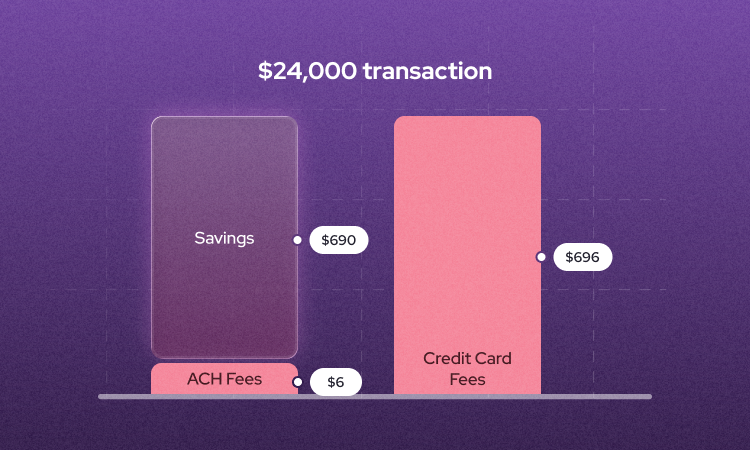
And often overlooked: cheaper payment methods exist, and most therapists simply never turn them on. ACH bank transfer typically costs a fraction of what a credit card transaction costs — but if your processor doesn't support it, or doesn't make it easy to offer, you never even see it as an option. Most practices default to "credit card only" not because it's the best choice, but because no one ever showed them there was another one.
How to Calculate Your Payment Processing Fees as a Therapist
Before you shop for a better rate, you need to know what you're actually paying now. This is the fuller version of the math above — same 80-session month, but now with the actual platform rate and monthly fee added in, worked out in under five minutes.
Step 1: Add up your monthly client payment volume. Example: 80 sessions × $175 average session fee = $14,000/month
Step 2: Apply your transaction fee. At 3.15% + $0.30 (SimplePractice's rate): $14,000 × 3.15% = $441, plus 80 × $0.30 = $24. Total: $465/month
Step 3: Add any platform or monthly fees. SimplePractice Essential plan: $79/month. Running total: $544/month
Step 4: Annualize. $544 × 12 = $6,528/year in processing and platform fees
Now run the same 80-session month through an interchange-plus processor like Helcim, where the effective rate on most transactions lands below 2.5%:
- Transaction fee: $14,000 × 2.3% = $322
- Per-transaction fee: 80 × $0.08 = $6.40
- Monthly total: $328
- Monthly fee: $0
That's a savings of over $1,600 a year on processing alone, compared to the $6,528 you'd pay through SimplePractice's bundled rate.
Why Is Helcim the Cheapest Payment Processor for Therapists?
Helcim is the cheapest payment processor for therapists because it uses interchange-plus pricing with no monthly fees, signs Business Associate Agreements, and automatically lowers your rate as your practice grows — without you having to negotiate anything. And the best part: it does all of this while staying HIPAA compliant, which matters enormously for a practice handling client health information.
Most processors make their money by locking you into a flat rate and pocketing the gap between the wholesale interchange cost and what they charge you. Helcim does something different: it charges the actual wholesale cost of each transaction, plus a small, transparent margin. If card networks lower interchange rates (they do this twice a year), that saving flows through to you automatically. No phone calls, no renegotiating, no games.
This is where that actually shows up for a typical practice: You don't have to leave your EHR to get it. Remember the fee sandwich from earlier — Stripe's rate, plus your platform's markup on top of it? The Helcim Payment Extension is how you get out of it without switching software. It's a free browser extension that connects Helcim directly to the practice management platform you're already using, so you keep your scheduling, notes, and client records exactly where they are, but the payment itself runs through Helcim's rates instead of your platform's marked-up ones. No new system to learn, no migration, no disruption to clients — just a lower rate sitting quietly underneath the workflow you already have.
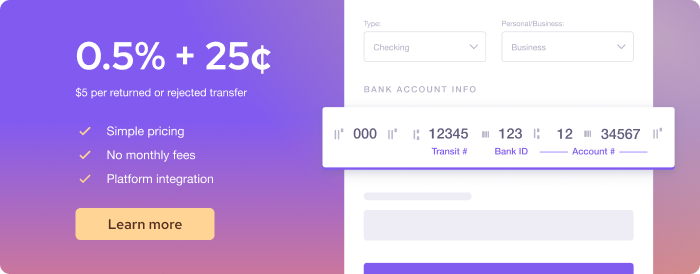
ACH payments at a fraction of the credit card rate. Many therapists never offer ACH simply because their processor doesn't support it, or buries it under a complicated setup. With Helcim, ACH costs a fraction of a percent. On a $175 session fee, that's about $1.13 versus the $5.82 you'd pay on a credit card at 3.15% + $0.30. Offer it as an option and the savings add up, session by session.
Fee Saver, for zero-cost credit card processing. This feature lets you pass credit card processing costs to clients who choose to pay by card — a surcharge (typically 3%) is added automatically and shown clearly at checkout. Clients paying by ACH or debit pay nothing extra. Surcharging is legal in most U.S. states and Canadian provinces when handled correctly, and Helcim Fee Saver manages the compliance side so you don't have to learn card network rules yourself.
Card-on-file for recurring sessions. Most therapy clients come back weekly or biweekly. Helcim's card vault lets you store client payment details securely and charge them after each session with one click — no awkward payment conversations, no chasing invoices. And it pairs well with how most practices already book clients: add a payment link to your booking confirmation alongside your cancellation or no-show policy, and the card gets stored the moment the appointment is made. By the time the client shows up for session one, the payment piece is already handled — no separate step, no relying on them to remember.
HIPAA compliance you can actually verify. Helcim runs a full HIPAA compliance program and signs BAAs with healthcare practices on request. Its annual audit reports are public at trust.helcim.com. For therapists who need to demonstrate compliance rather than assume it, that transparency is worth something.
How Do Therapists Encourage Clients to Use Low-Fee Payment Methods?
The simplest approach: offer ACH bank transfer as a default option alongside credit card, and explain the difference plainly at intake. A lot of clients don't realize bank transfer is even an option, or assume it's complicated. One line in your intake paperwork — "We accept bank transfer (ACH) at no additional charge, and credit card with a small convenience fee" — is usually enough to nudge behavior without any awkwardness.
A few tactics that work well in practice:
-
Put payment options in your intake paperwork. Your financial agreement is already part of onboarding — use it to lay out accepted payment methods, the difference between ACH and card, and any applicable fees. Clients who understand the options up front are more likely to pick the cheaper one.
-
Attach a payment link to the booking itself. When you send a booking confirmation, attach a payment link alongside your cancellation or no-show policy, and have the client store their payment method right then. It's one step for the client instead of several, and it means the method on file is whichever one you presented first.
-
Set ACH as the default in your payment portal. If your system lets you control the order payment methods appear in, put ACH first. Small nudges like this have an outsized effect on what people click.
-
Use card-on-file, and choose what goes on file. When a client's payment method is stored and charged automatically after each session, you control which method gets stored in the first place. Encourage ACH at intake rather than card, and most clients will simply go along with it.
Some clients will always choose credit card — it's convenient, it earns them rewards, and for a lot of people it's just automatic. That's where Fee Saver earns its keep: instead of absorbing that 3% yourself, the processor recovers it transparently at checkout.
Can Therapists Negotiate Lower Payment Processing Fees?
Only if you have enough volume to give you leverage — and even then, not every processor is open to a conversation.
Flat-rate processors like Square, Ivy Pay, and most EHR-bundled solutions don't negotiate. The rate is the rate. Stripe offers custom pricing for businesses processing over $250,000 a year, but that means initiating a conversation with their sales team, and it still doesn't include HIPAA compliance by default.
Interchange-plus processors like Helcim take a different approach — one that works in your favor without any negotiating at all. Helcim's volume discounts kick in automatically based on your three-month rolling average. The more you process, the lower your markup, without you ever having to ask. That's a fundamentally fairer setup than one where your rate depends on how confidently you can negotiate.
If you're on a flat-rate plan and curious what you're leaving on the table, pull your last three months of statements, calculate your effective rate (total fees divided by total volume), and compare it to what an interchange-plus processor would have charged on the same volume. The gap is usually bigger than people expect.
Which Payment Processors for Therapists Are HIPAA Compliant?
The HIPAA-compliant options for therapists are those that sign a Business Associate Agreement and implement the administrative, technical, and physical safeguards HIPAA requires. That includes Helcim, Ivy Pay, Square (configured correctly), and Chase InstaMed.
This is worth slowing down on, because the HIPAA-and-payments landscape genuinely confuses people, and there's a lot of misinformation circulating in therapy communities.
The nuance that usually gets missed is this: payment processing itself isn't covered by HIPAA. Running a card through a terminal doesn't involve Protected Health Information. What does involve PHI is invoicing — the moment you put a client's name, session date, and service type on a document, that document is PHI and has to be handled under HIPAA rules.
Practically, that means:
- If you use an EHR platform (SimplePractice, TherapyNotes, Jane, etc.) to create and send invoices, the platform is your HIPAA-covered entity, and its BAA covers that billing workflow.
- If you use a standalone processor purely to collect payment, without linking client identity to the transaction, the BAA requirement is more nuanced.
- If you use a processor for invoicing — itemized bills with client names and services — that processor needs to sign a BAA.
Helcim signs BAAs for healthcare practices on request, covers both payment processing and invoicing, and publishes its HIPAA audit report publicly. That makes it one of the more transparent options in the market — and one of the cheapest.
Frequently Asked Questions
Should therapists collect deposits for clients as well as self-pay clients?
Yes — deposits make sense for both insured and self-pay clients. For self-pay clients, a deposit confirms commitment to treatment and protects your time against late cancellations or no-shows. For insured clients, it can cover the portion of the fee that falls within a deductible or co-insurance, which can be significant early in the plan year. The key is consistency: be clear about your deposit policy up front, include it in your informed consent and financial agreement, and apply it the same way for everyone. Selective deposit policies create both ethical and legal exposure.
How should therapists explain deposit policies to clients?
The best time is before the first session, ideally during an initial phone consultation or as part of intake paperwork. Keep it plain and non-apologetic: "To reserve your appointment time, I ask for a deposit of X amount, which is applied to your first session. My cancellation policy and how deposits are handled are outlined in the financial agreement I'll send before we meet." Frame it as standard practice, not a sign of distrust. Clients who feel clearly informed rarely push back.
Should a deposit be refunded if the final bill is lower than expected?
Yes. If a deposit exceeds the final balance, the difference should be refunded promptly. This is both an ethical and a practical matter — unexpected charges erode trust quickly, especially in a therapeutic relationship where trust is the whole point. Use a processor that supports straightforward refunds without penalizing you for issuing them. Helcim doesn't charge extra for refunds, though the original transaction's processing fee isn't returned — that part is standard across the industry.
What should therapists do when a client asks for a refund of a prepaid deposit?
Handle it calmly and according to your stated policy. If your financial agreement specifies deposits are non-refundable under certain conditions (late cancellation, no-show, within a certain window), you're within your rights to apply that — as long as you communicated it clearly before the client paid. If the request is for a legitimate reason (you cancelled the session, service wasn't rendered), issue the refund promptly. A clear, written deposit policy that clients sign before their first session is what protects both sides here.
Can therapists process deposits using card-on-file payments?
Yes, and it's one of the more efficient ways to do it. With card-on-file, clients enter payment details once at intake — securely stored and tokenized — and you can charge a deposit directly from your dashboard without the client needing to be present. Helcim's card vault supports exactly this: store a card or bank account on file, and charge deposits, session fees, or outstanding balances with a single click. Just make sure your financial agreement explicitly authorizes you to charge the stored method — including for deposits, cancellation fees, and outstanding balances — and that the client signs it before treatment begins.
The payment side of running a therapy practice shouldn't feel like a tax on helping people. With the right processor, you keep more of what you earn, stay compliant without the stress, and give clients a smoother experience from the first session to the final invoice. Get started with Helcim for free — no monthly fees, no contracts, and a BAA available on request. Your practice earns it. Keep more of it.